
Donegall Place & Royal Avenue Belfast-Shopping in Belfast
Updated On: April 16, 2024 by  Ciaran Connolly
Belfast, the capital city of Northern Ireland, is a vibrant hub of culture, history, and commerce. The city boasts a thriving shopping scene among its many attractions, with Donegall Place and Royal Avenue standing as the beating heart of retail activity. From high-street brands to unique boutiques, this bustling area offers something for every shopper. Let’s look closer at what makes Donegall Place and Royal Avenue essential destinations for those seeking retail therapy in Belfast.
Donegall Place and Royal Avenue in Belfast City Centre would be the main shopping area in the city. It is a historic pedestrian area leading to the city hall and the city’s main shopping centres. With Christmas getting closer and closer each day, it’s about time we all get our last-minute shopping done and what better place to do so than Donegall Place and Royal Avenue in Belfast.
The city of Belfast transforms into a winter wonderland during the holidays. So, it’s an excellent opportunity for exploration and a great deal of shopping! One of Belfast’s most well-known locations is Royal Avenue in the Cathedral Quarter in the heart of Belfast, which has been the city’s main shopping thoroughfare since its establishment in the late 19th century.
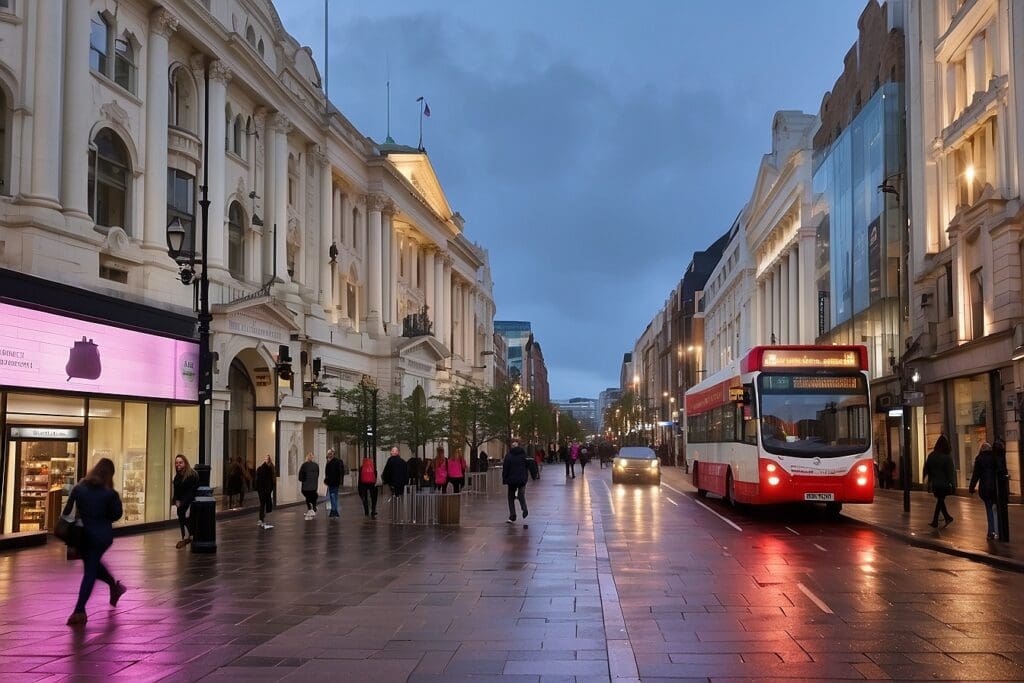
It is home to the shopping complex Westfield CastleCourt. It begins from the Donegall Place junction with Castle Place and Castle Street, which is the hub of Belfast’s city centre, runs north to the North Street crossing, and angles northeast to the Donegall Street intersection, continuing in a northeasterly direction as York Street.
Royal Avenue has many Victorian and Edwardian buildings, including the Belfast Central Library and the Haymarket Building, alongside the modern shopping complexes.
You could also head to Donegall Place for fun, take a trip down the Giant Snow Slide, or enjoy a wide range of food from the festive food trailers along the street. The pedestrian shopping streets converge on Donegall Square, where you can find the Titanic Memorial, erected in memory of the victims of its ill-fated maiden voyage.
The square is named after the Donegall family, as were several of Belfast’s most famous streets, including Donegall Quay, Donegall Place, Donegall Road, Donegall Pass and Donegall Street.
History of Donegall Place
Royal Avenue was established in 1881. Since then, it has become Belfast’s principal shopping thoroughfare, and today, it is lined with major department stores and big brand shops.
The city’s most prestigious and elegant hotel, the Grand Central Hotel, was on the street before it was demolished in the late 1980s to make room for the £40 million shopping complex, Westfield CastleCourt.
The hotel, which first opened in 1893, became the “social hub of Belfast” and provided a temporary home for many illustrious guests, including King Leopold III of Belgium, Sir Winston Churchill, Gene Autry, Bob Hope, The Beatles, and the Rolling Stones. In 1971, it was converted into a fortified military barracks serving as battalion headquarters for British Army regiments based in Belfast city centre.
The area was hit by bombs during the Belfast Blitz when the German Luftwaffe bombarded the city in 1941.
Royal Avenue Now
Royal Avenue houses many shops and major department stores that attract numerous shoppers daily. This includes branches of big brands, such as Primark, Tesco, H&M, and Schuh. The Westfield CastleCourt also hosts 69 stores, including Gap, Debenhams, Burton and Argos.
The street can also be seen in movies, as it was used to film many scenes in the 2011 comedy film Killing Bono to recreate Dublin as it appeared in the late 1970s and early 1980s.
So, if you’re ever in Belfast, visit Donegall Place and Royal Avenue and spend some time browsing through the shops and sampling the tasty local cuisine for an unforgettable experience.
The Legacy of Donegall Place & Royal Avenue
Donegall Place and Royal Avenue have long been central to Belfast’s commercial landscape. The area’s history as a shopping destination dates back over a century, with grand department stores and elegant boutiques drawing crowds from near and far.
Royal Avenue, once known as ‘York Street’, underwent significant redevelopment in the 19th century, becoming a bustling thoroughfare lined with shops and businesses. Meanwhile, Donegall Place emerged as a retail hotspot, featuring iconic landmarks like the majestic Belfast City Hall and the historic Robinson & Cleaver building.
Shopping in Donegall Place & Royal Avenue
Today, Donegall Place and Royal Avenue continue to captivate shoppers with their diverse offerings. Visitors can explore an array of well-known brands, designer stores, and local businesses, all nestled within a picturesque urban landscape.
From flagship stores of international retailers to charming independent boutiques, there’s no shortage of options for fashion enthusiasts. Trendy clothing stores, shoe shops, and accessory boutiques cater to every style and budget, ensuring shoppers can find the perfect ensemble for any occasion.
In addition to fashion, Donegall Place and Royal Avenue also boast an impressive selection of beauty and cosmetics outlets. Beauty aficionados can indulge in many pampering products and treatments, from luxury skincare brands to specialist makeup stores.
The area has various eclectic shops and artisanal stores for those seeking unique gifts or homeware items. Whether you’re searching for handcrafted ceramics, vintage treasures, or quirky souvenirs, you’re sure to find something special amidst the bustling streets of Belfast.
Dining and Refreshments
Amidst the excitement of shopping, visitors to Donegall Place and Royal Avenue can also enjoy a diverse culinary experience. The area has cafes, restaurants, and eateries offering everything from quick bites to leisurely dining experiences.
Coffee aficionados can start their day with freshly brewed java at one of the area’s charming cafes. At the same time, foodies can explore a range of international cuisines, from Italian trattorias to Asian fusion eateries.
Traditional Irish pubs and eateries serve hearty dishes made with the finest local ingredients for those craving a taste of local flavour. From hearty stews to freshly caught seafood, there’s no shortage of delicious fare to satisfy your appetite.
Embracing Culture and Entertainment
Beyond its retail offerings, Donegall Place and Royal Avenue are also vibrant cultural hubs, with various entertainment venues and attractions to explore. The area is home to historic theatres, art galleries, and performance spaces, offering visitors a chance to immerse themselves in Belfast’s rich cultural heritage.
Throughout the year, the streets of Donegall Place and Royal Avenue come alive with festivals, live music events, and street performances, providing entertainment for shoppers and passersby alike.
Accessibility and Amenities
Donegall Place and Royal Avenue are easily accessible by public transport, with bus and train stations nearby. The area is also pedestrian-friendly, with wide sidewalks and pedestrianised zones, making it easy to explore on foot.
Visitors will find a range of amenities, including public restrooms, seating areas, and information points, ensuring a comfortable and enjoyable shopping experience for all.
Nearby Attractions
Cathedral Quarter
The Cathedral Quarter, named after St. Anne’s Cathedral, is home to a bustling culture and arts scene, cosy pubs, underground music venues, and contemporary restaurants.
The Cathedral Quarter in Belfast is a developing area of the city. It also contains the former “Little Italy” area. The Cathedral Quarter extends out to the old merchant quarter of the city.
St Anne’s Cathedral lies right in the centre of the Cathedral Quarter. St. Anne’s or Belfast Cathedral is a Church of Ireland cathedral.
The Cathedral Quarter was the centre of Belfast’s trade and warehousing district, where the linen and shipbuilding industries were based. The quarter features some of Belfast’s oldest buildings and thoroughfares.
Ormeau Park
Ormeau Park is perhaps the oldest public park in Belfast, Northern Ireland. It is also one of the largest and busiest parks in the city. It is considered a famous sports venue, providing numerous facilities in the Ormeau Park Playing Fields, including soccer pitches, bowling greens and pavilions, a BMX track, and basketball and tennis courts. The park also has a children’s playground.
The park has since been used for more events, including the Belfast City Marathon and Belsonic, one of two main Belfast music festivals.
It is also popular among walkers and joggers and has a range of eco trails and orienteering routes.
Conclusion
Donegall Place and Royal Avenue are shining examples of Belfast’s vibrant retail scene, offering a captivating blend of history, culture, and commerce. The area has something to delight every shopper and visitor, from fashion-forward boutiques to gourmet eateries.
Whether seeking the latest trends, indulging in culinary delights, or immersing yourself in the city’s cultural offerings, Donegall Place and Royal Avenue provide a captivating backdrop for an unforgettable shopping experience in Belfast. So, next time you find yourself in the heart of this bustling city, take some time to explore the treasures awaiting you in Donegall Place and Royal Avenue.
Have you ever visited Belfast City Centre for shopping? The shopping hub of Belfast. Let us know your thoughts in the comments below.
Other great places to visit for shopping: Grafton Street Dublin, Ireland | Shopping in Ireland | M&M World London | Camden Town Market | St. Georges Market Belfast

10 Spectacular Scenic Drives in Ireland: Explore the Beauty of the Emerald Isle!
Ireland
19/04/2024
The Kingdom of Ireland: King Henry VIII’s Declaration as the King of Ireland
Ireland
19/04/2024
The Truth about the Claddagh Ring Curse: Debunking Myths and Exploring the Symbolism
Mythology and Folklore
19/04/2024
Top 10 Irish Public Holidays and Traditions to Experience on Your Ireland Holidays
Festivals and Events
18/04/2024

6 Top Mourne Camping Sites for an Unforgettable Experience Under the Stars
Northern Ireland
18/04/2024