

Donaghadee County Down – A lovely seaside town to check out!
Updated On: April 15, 2024 by  Noha Nabil
Donaghadee is a small town in County Down, Northern Ireland. It lies on the northeast coast of the Ards Peninsula, several miles to the east of Belfast.
Donaghadee is the closest town in Ireland to Scotland. You can spot the Scottish coast if you concentrate hard enough.
The town is known for its many attractions, including the lighthouse and moat, as well as its souvenir and antique shops.
History of Donaghadee Northern Ireland
Donaghadee comes from the Irish word Domhnach Daoi, which has two possible meanings, either the ‘church of Daoi’ or the ‘church of the motte’ The town was originally a Gaelic ringfort when the Anglo-Normans conquered the area; they built a motte and bailey castle, lending to the town’s name.
Motte-and-bailey castles are found throughout Europe. The Motte was a raised mound on which the castle sat. The bailey was the enclosed courtyard which surrounded the castle. The structures were usually wooden and constructed quickly after the territory was taken over, while a more permanent castle was built. This meant that the structure could be set up fast, but on the downside, it was susceptible to fire. We have attached a video of the ancient motte and bailey castle below, which still stands tall in Donaghadee today!
Due to its proximity to Scotland, Donaghadee was a significant point of entry for travellers from Great Britain to the Irish island until the middle of the 19th century.
Due to Belfast’s growth as a significant city, Donaghadee began attracting merchants looking to escape the city for a holiday by the sea.
From the mid-18th to the mid-19th century, Donaghadee was used by couples going to Portpatrick, Wigtown, Scotland to marry, as Portpatrick was known as the “Gretna Green for Ireland”.
Today, the town’s mix of historic and modern attractions makes it popular among tourists from all over.
The Donaghadee Lighthouse
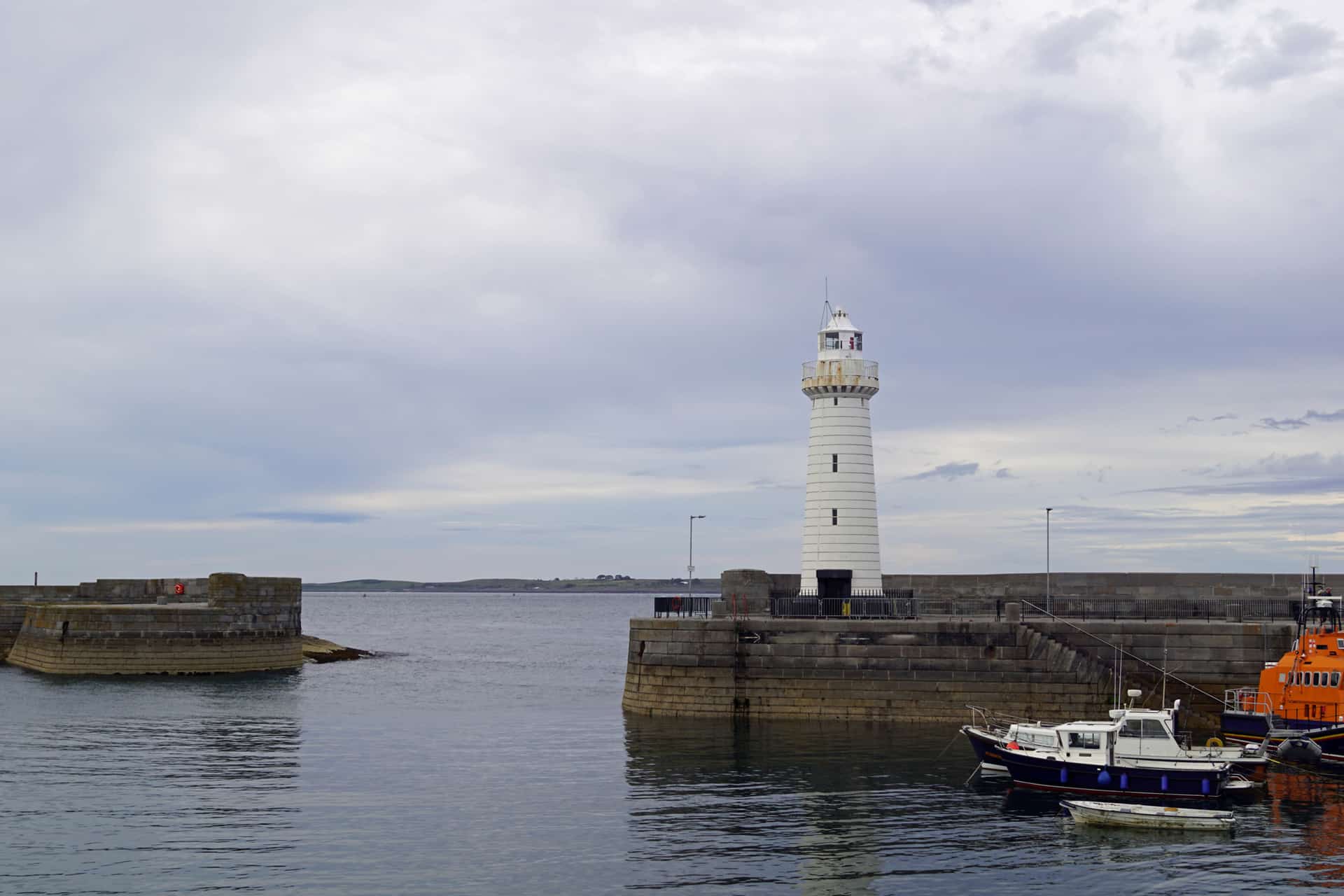
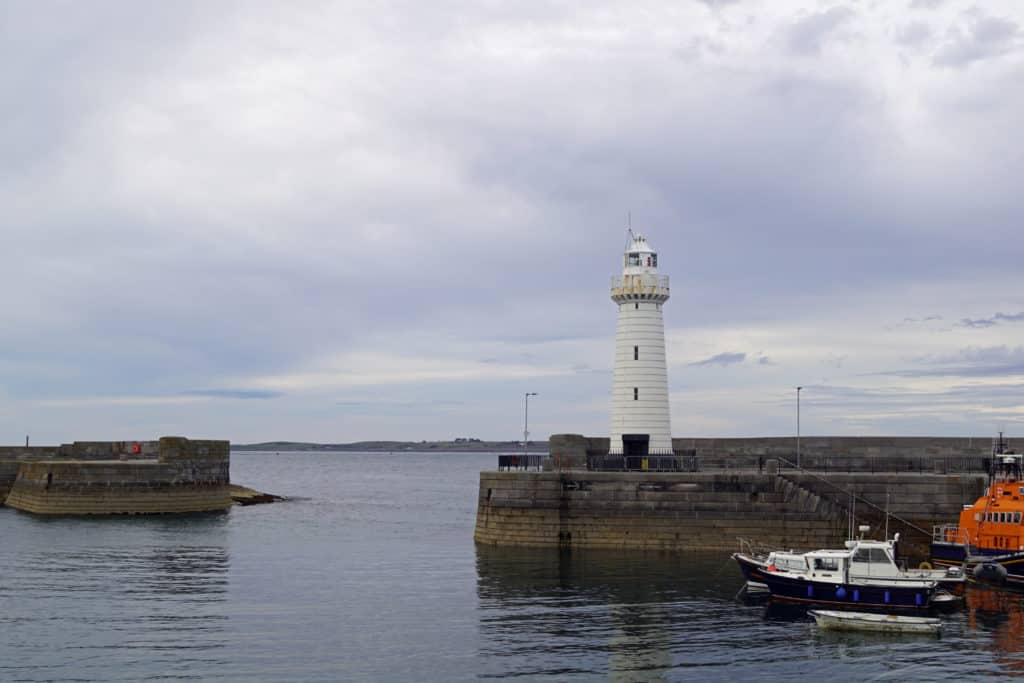
One of the most well-known attractions in Donaghadee is the lighthouse and harbour. The harbour dates back to the 17th century and has an iconic lighthouse with its beam and fog horn to guide ships during trouble.
The limestone tower includes a lantern, dome, and a small haven for its Keeper, which was included in 1841. It was the first Irish lighthouse to use electric power at the beginning of the 20th century.
The Donaghadee Moat
One of the most prominent features of the town, the Donaghadee Moat, was initially constructed in 1818 to store the explosives used in the blasting process during the harbour construction.
Today it can be found in a park, overlooking the town and the Copeland Islands. Due to its excellent location, it was previously used as a defensive post in the Bronze Age. Later on, it also provided much-needed protection against the Viking raids.
Donaghadee Hope Street
Did you know that Donaghadee features as the fictional town of Port Devine in the 2021 BBC Comedy Hope Street? It’s not surprising that many TV shows and films have used or been inspired by the picturesque seaside town of Donaghadee; even Johnny Cash mentioned the town in his song ‘Forty Shades of Green’.
Lifeboat Luke is an animated children’s series set in the fictional town of Donaghadoo. It’s not too far of a stretch to say that the seaside town is based on Donaghadee, judging by the name alone!
What to do in Donaghadee
There are many things to do in Donaghadee. Visitors can enjoy several scenic routes and several restaurants and pubs in the town, including Grace Neill’s, one of the oldest bars in Ireland, which opened in 1611. The seaside town offers beautiful views from Donaghadee beach
-
Grace Neill’s Donaghadee
Established in 1611, Grace Neill’s is known as one of Ireland’s oldest pubs. It was initially known as The Kings Arms for over 400 years. Its newer name is a tribute to the original owner, who was given the bar as a wedding president by her father, Hugh Jamison. Grace was known as a friendly lady with a strong spirit and has been a popular location throughout the centuries.
-
Sports
Sports enthusiasts or those looking to spend their time in Donaghadee by playing their favourite sport will find facilities for several sports including cricket, tennis, bowling, darts, golf, women’s hockey, football, sailing, and rugby.
-
Cockle Row Cottages
The Cockle Row Cottages are several restored fisherman’s cottages that offer visitors a chance to explore their rich maritime heritage and history, and what it was like to be a fisherman during the 20th century.
Children will also find it exciting as they can join various excellent activities, including face painting, arts and crafts, and balloon modelling. The tours include live music, craft fairs, falconry displays, highland dancing, piper demonstrations, a mobile, open farm, a science and magic show, Dino Dig and crazy clay workshops, among many other activities.
-
Bangor Aurora
Bangor Aurora offers plenty of opportunities for aquatic fun for the whole family, including 3 swimming pools, leisure waters with flumes, inflatable fun, Northern Ireland’s only ‘Sidewinder’ slide, and extensive gym facilities. There are diving and toddler pools and a children’s play area. The centre also offers swimming lessons for all ages and has a diving programme.
The Center also offers all to enjoy badminton, netball, basketball, indoor football, volleyball, trampolining, gymnastics, and martial arts.
-
Pickie Fun Park
The Pickie Fun Park is located at Bangor Marina, with views over Belfast Lough.
If you’re planning a fun family day in Bangor, look no further than Pickie Fun Park. The Park features many entertaining attractions, including the Pirates Slide, 18 Hole Links Mini Golf, Kid’s Electric Car Track, Pedal Swans, Water Walkers, Splash Pads, Narrow Gauge Railway, and the Play Park.
The park also features comfortable Victorian-style beach huts as changing facilities.
One of the top ten visitor attractions in Northern Ireland, the Pickie Fun Park underwent major renovations worth almost £2.6 million in 2012.
Now, parents accompanying their children can sip a cooling drink on the terrace of the Windjammer Café while the children play in the Adventure Playground. The café’s glass surround, family-friendly menu, and stylish interior promote a fresh and modern feel, offering superb views over Bangor Marina and Belfast Lough.
Visitors of the Park can also enjoy stunning panoramic views of Bangor Bay and the hills of Antrim.
If you’re planning a visit to Donaghadee soon, then be sure to check the locations mentioned in this list one by one and don’t miss out on all the fun!
Also, don’t forget to check out other places and attractions around Northern Ireland that might interest you: Bangor Harbour: A Lovely Seafront Walk | Ulster Folk Museum | Pickie Fun Park | Down County Museum | Downpatrick Town
How to Find the Best Scotland Travel Guide: An Ultimate Guide
Scotland
24/04/2024

The Ultimate Guide to the Best Shopping Areas in London
England
24/04/2024

The Absolute Guide to the Best Restaurants in Bath, England: Unveiling the Culinary Gems of Bath!
Food and Cuisine
24/04/2024
Planning a Trip to Scotland: Your All-Inclusive Guide to Exploring the Great Highlands
Travel Guides
23/04/2024
Your Ultimate Guide to Explore the Top Castles in Kent, England
England
23/04/2024