Updated on:
by
 Asmaa Alhashimy
 Asmaa Alhashimy
Article Summary
What this article covers: Limerick City’s history and main attractions, County Limerick’s thirteen towns, and the county’s culture and sporting reputation.
Who this is for: Travellers planning a trip to County Limerick, and readers interested in the county’s medieval history and modern sporting culture.
Key takeaway: County Limerick pairs a city with genuinely deep medieval roots, founded by Vikings and shaped by centuries of siege and conflict, with thirteen distinct towns and a sporting reputation few Irish counties can match.
Expert insight:
Standing at St Mary’s Cathedral, what strikes you is that this building has been in continuous daily use since 1168. That is not a restored ruin you are looking at, it is a working cathedral that has simply never stopped, through sieges, through the Reformation, through everything Limerick’s history threw at it.
Ciaran Connolly, Founder of ConnollyCove
Quick facts:
- Limerick City was founded by Vikings around 922 AD and is now the third largest city in the Republic of Ireland
- St. Mary’s Cathedral, founded in 1168, is Limerick’s oldest building still in continuous use
- County Limerick holds thirteen distinct towns beyond Limerick City itself, and saw over four hundred castles built during the Anglo-Norman period, more than any other Irish county
Table of Contents
County Limerick, in the province of Munster, combines a genuinely historic city with quiet countryside and thirteen distinct towns worth exploring in their own right. This guide covers Limerick City’s history and main attractions, the county’s towns, and where sport and culture fit into the wider picture.
The City of Limerick
Limerick City, County Limerick’s main urban centre, was founded by Vikings around 922 AD and remains home to over 94,000 people, making it the third largest city in the Republic of Ireland. St. Mary’s Cathedral, founded in 1168 by Donal Mór O’Brien, King of Munster, is the city’s oldest building still in continuous use, standing on the site of the king’s former palace.
The History of County Limerick
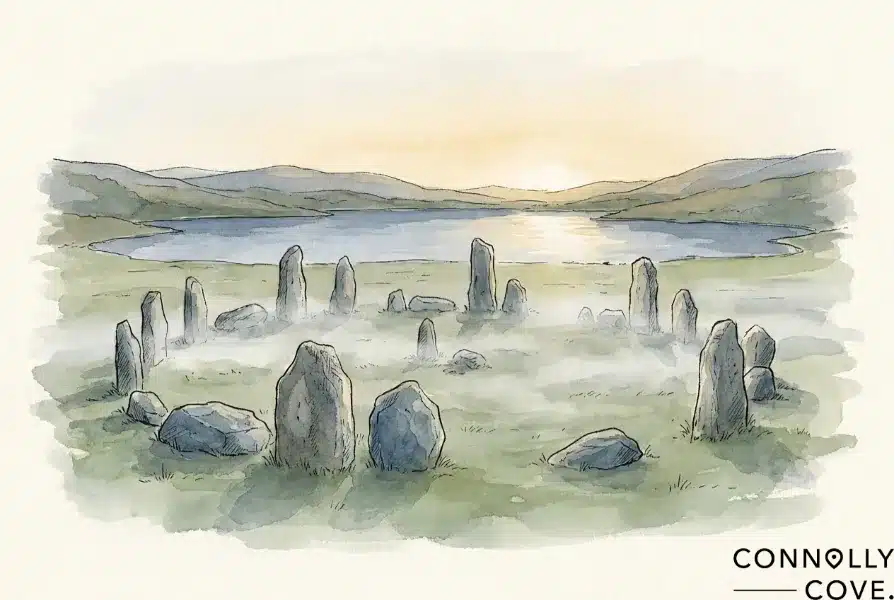
The earliest evidence of human activity in County Limerick predates the city itself by millennia: the Stone Age tomb at Duntryleague and the stone circles at Lough Gur both date to around 3000 BC. Limerick City’s own story began with the Viking settlement, and in 1194, following the death of the King of Munster, the Anglo-Normans took control. County Limerick was formally established for administrative purposes in 1210, and during the Anglo-Norman period, more than four hundred castles were built across the county, more than anywhere else in Ireland.
The Seventeenth Century
Limerick endured repeated sieges through this century. The city lost control during the 1641 Irish Rebellion, and Cromwell’s forces under Henry Ireton took it again in 1651. Two further sieges followed during the Williamite War, in 1690 and 1691, ending with the Treaty of Limerick, which brought the conflict to a close.
The Eighteenth Century
The Penal Laws pushed Limerick’s Catholic population into poverty and excluded them from public life through much of this century. Alongside that hardship came genuine economic expansion, including the development of Newtown Pery, a new quarter laid out by and named after Edmund Sexton Pery.
The Nineteenth Century
Emigration reshaped County Limerick during this period, with large numbers leaving for Australia, the United States and Canada. The Great Famine of the 1840s killed roughly a million people across Ireland, and while County Limerick was less severely hit than the west of the country, the county still lost around 21% of its population during the decade, more to emigration than to hunger directly. The county modernised in the decades that followed, gaining fire services, gas and water supply, social housing and public health provision, alongside new churches, schools, and the traditional industries, flour milling, dairy, lace and clothing, that would define its economy for the following century.
The Twentieth Century
County Limerick played its own part in the road to Irish independence during this period. The University of Limerick, founded in 1972, brought a new kind of institution to the county, and multinational companies gradually replaced many of the older traditional industries that had defined the nineteenth-century economy. Limerick continued building its reputation in sport, business and culture through the century that followed, a considerable contrast to the poverty and repeated conflict of its earlier history.
The Towns of County Limerick
Beyond Limerick City, County Limerick holds thirteen distinct towns, each with its own character.
Abbeyfeale, the county’s second-largest town, sits beside the River Feale at the foot of the Millaghareirk Mountains and hosts Fleadh by the Feale, a traditional Irish music festival that grew directly out of the town’s successful 1993 hosting of Fleadh Cheoil Luimnigh. ConnollyCove’s guide to the tradition of the ceilidh covers the wider Irish traditional music and dance scene this kind of festival belongs to.
Adare, often called Ireland’s friendliest village, sits on the River Maigue roughly 18 kilometres from Limerick City, holds Heritage Town status, and has won multiple Tidy Towns awards for its medieval buildings and thatched cottages.
Askeaton, on the River Deel, holds Askeaton Castle on a small island in the town centre, dating to the 11th century and once home to the Earls of Desmond, with a banqueting hall considered among Ireland’s finest surviving medieval buildings.
Bruff, on the Morning Star River, holds a memorial to Sean Wall, a volunteer in the Irish War of Independence, and sits close to Lough Gur, one of County Limerick’s main archaeological attractions.
Castleconnell, on the River Shannon near the Clare and Tipperary borders, is a strong fishing destination on both the Shannon and Mulkear rivers, and draws birdwatchers for its winter swan population arriving from Iceland.
Foynes, in the west of the county, was a major deepwater seaport and became the centre of the transatlantic aviation world between 1939 and 1945. Its Flying Boat Museum covers that history directly, and Foynes also claims the invention of Irish coffee, first made there in 1942 for passengers waiting on a delayed flying boat.
Glin, seat of the Knights of Glin from roughly 1260 to 1642, holds a castle still visible today, open to visitors by appointment, and a market square that hosts an annual Horse and Cattle Fair each December.
Kilfinane, in the Ballyhoura Mountains at around 150 metres above sea level, offers strong views and an outdoor education centre with kayaking, canoeing and abseiling.
Kilmallock, a walled medieval town that ranked among Munster’s most significant during that period, holds church and abbey ruins dating from the 13th to 15th centuries and runs an annual medieval festival.
Murroe, founded in the 1830s by the Barrington family, has grown from under 200 residents in the 1950s to around 3,000 by 2016.
Newcastle West, on the River Arra with a population of roughly 7,000, has grown by nearly half over the past 25 years, with around one in five residents born outside Ireland.
Rathkeale, southwest of Limerick City, is believed to date to 1289 and carries the layered influence of successive periods of settlement.
Things to Do in Limerick City
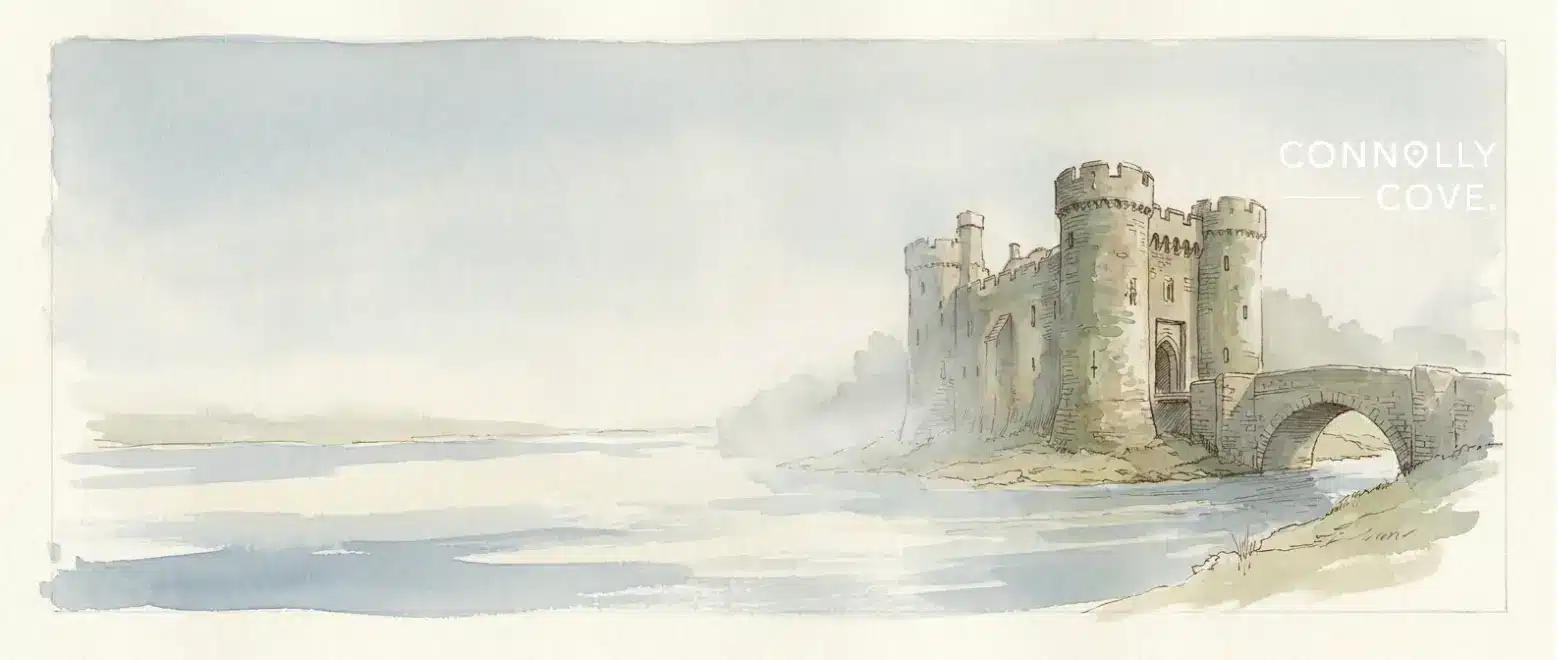
King John’s Castle, built in the 13th century, is considered one of Europe’s best-preserved medieval castles, with original walls, towers and fortifications still visible. A renovation completed in 2013, costing over five million euros, added a visitor centre and interactive exhibitions covering the castle’s 800-year history.
The Milk Market, Limerick’s well-known farmers’ market, runs around 50 stalls and 21 shopping units under a fully weatherproofed structure, largely staffed by locals selling fresh, regional produce.
St. Mary’s Cathedral, discussed above, is open daily from 9am to 4pm and remains in active use as a place of worship, its gothic windows and medieval floors intact since the 12th century.
St. John’s Square and Cathedral, a short walk from St. Mary’s, pairs Georgian townhouses from the 17th century with a Gothic-style cathedral holding the tallest church spire in Ireland.
Limerick City Gallery of Art, the largest contemporary art gallery in the Mid-Western Region, holds Irish artwork spanning the 18th to 21st centuries, including the Michael O’Connor Poster Collection and work by artists including Jack Yeats and Sean Keating.
The People’s Park, opened in 1877 in memory of businessman Richard Russell, holds a Victorian bandstand, a memorial to MP Thomas Spring Rice, and a refurbished drinking fountain among its Georgian-square greenery.
The Hunt Museum, opened in 1997, displays the private collection of antique dealers John and Gertrude Hunt, spanning the Bronze Age through the medieval period, housed in the 18th-century Custom House building.
Culture and Sport in County Limerick

Limerick holds National City of Culture status and is home to the Irish World Academy of Music and Dance, the Irish Chamber Orchestra, and multiple performance venues. Riverfest, held annually over the May bank holiday weekend, is the county’s largest festival, combining music, sport, food and water-based activities on the Shannon over four days.
County Limerick has also earned recognition as Ireland’s Sporting Capital, the only Irish city awarded the European City of Sport title. Rugby captain Paul O’Connell, one of the most-capped players in Irish rugby history, hails from the county, and Munster’s home ground, Thomond Park, sits in Limerick City itself. ConnollyCove’s guide to successful Irish athletes covers O’Connell alongside Ireland’s other major sporting figures. Beyond rugby, County Limerick’s GAA teams have won multiple All-Ireland Championships, and boxer Andy Lee brought home a world title in 2014. ConnollyCove’s guide to the GAA covers the sport’s role across Ireland in more depth.
Conclusion
County Limerick pairs a city with genuinely deep medieval roots against thirteen distinct towns, each carrying its own specific history rather than a generic rural backdrop. Between the castles, the cathedral, and a sporting reputation few counties can match, it rewards more time than most visitors initially plan for it.
Explore More of Ireland
ConnollyCove covers destinations across Ireland in more depth. Explore the guide to County Down or County Sligo, or watch our YouTube channel for more on Ireland’s counties.
Frequently Asked Questions
When was Limerick City founded?
Limerick was founded by Vikings around 922 AD, making it one of Ireland’s oldest cities, and it remains the third largest in the Republic of Ireland today.
What is the oldest building in Limerick?
St. Mary’s Cathedral, founded in 1168 by Donal Mór O’Brien, King of Munster, on the site of his former palace, is Limerick’s oldest building still in continuous use.
How many towns are there in County Limerick?
Thirteen distinct towns exist beyond Limerick City itself, ranging from Abbeyfeale, the county’s second largest, to the smaller Rathkeale and Murroe.
Why is Limerick known as Ireland’s Sporting Capital?
Limerick is the only Irish city to hold the European City of Sport title, and has produced major sporting figures including rugby captain Paul O’Connell and boxing world champion Andy Lee, alongside strong GAA and rugby traditions.
What happened at the Treaty of Limerick?
Signed in 1691, the Treaty of Limerick ended the Williamite War in Ireland following two sieges of the city, marking a significant turning point in Irish history.
Where was Irish coffee invented?
Foynes, in west County Limerick, claims the invention of Irish coffee in 1942, created for passengers on a delayed transatlantic flying boat.