
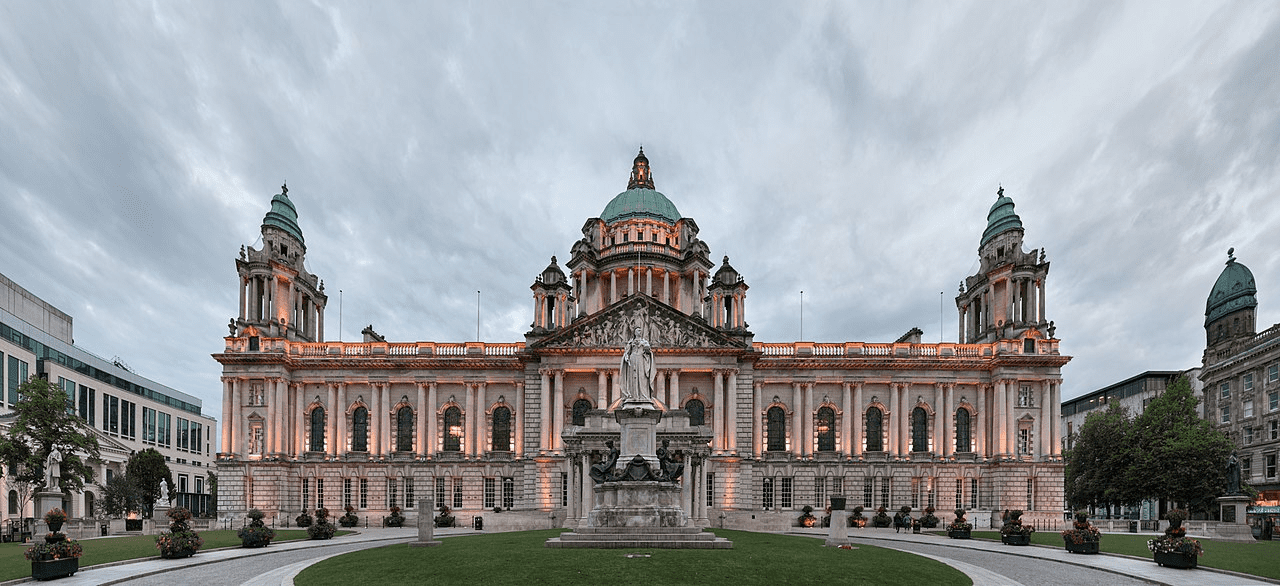


City Hall Belfast is the building every visitor to Northern Ireland’s capital ends up standing in front of, whether they planned to or not. It anchors Donegall Square, faces the main shopping streets, and works as the natural starting point for almost any walk through the city centre. The building opened in 1906, a few years after Belfast was granted city status, and it has stayed at the centre of civic life ever since, through industrial boom, wartime bombing, the Troubles and the peace process that followed.
This guide covers what you need for a visit: opening hours, tours, cost and access. It also goes further than most quick city guides, into the architecture, the exhibitions, and the quieter Titanic-era craftsmanship behind the interior.
When you visit Belfast, the City Hall is where the story starts.
Table of Contents
Belfast City Hall at the Heart of Donegall Square
Belfast City Hall stands in Donegall Square, and understanding why the building exists at all tells you something about Belfast itself. The name Belfast comes from the Irish Béal Feirste, meaning the mouth of the sandbank ford, a reference to the crossing point on the River Lagan around which the settlement grew. By the late nineteenth century, that small river port had become one of the industrial powerhouses of the United Kingdom, driven by shipbuilding, rope-making, engineering and the linen trade.
Queen Victoria granted Belfast city status in 1888, recognising its growth. The old Town Hall on Victoria Street no longer matched the city’s new standing, so plans went ahead for a building that would. City Hall opened in 1906, and it has occupied the same spot in Donegall Square ever since, facing north across the pedestrian streets that lead into Belfast’s main shopping district. If you are planning a visit, our Donegall Place and Royal Avenue guide covers the shopping streets that run directly from the City Hall grounds, and our wider history of Belfast sets the building in the context of the city’s industrial rise.
Travellers exploring Belfast for the first time often start here simply because it is impossible to miss. The building’s scale and position make it the natural reference point for the rest of the city centre, and most walking tours use it as either the starting or finishing landmark.
Planning Your Visit
Opening hours and guided tours. City Hall is open to the public year-round, and the grounds are accessible daily. Guided tours of the interior run on a regular schedule and are free, though exact days and times change periodically, so it is worth checking the current schedule directly with Belfast City Council before you travel, particularly if a specific tour slot matters to your itinerary. Self-guided visits to the permanent exhibition are also available during opening hours, with informative panels providing context if you would rather explore at your own pace.
Getting there. City Hall sits in the pedestrianised heart of Belfast city centre, an easy walk from Belfast Central Station (Lanyon Place) and well served by Translink Metro and Glider routes into Donegall Square. If you are staying in the Cathedral Quarter, Titanic Quarter or Queen’s Quarter, City Hall is within easy walking distance of all three, and our city breaks in Belfast guide covers how the neighbourhoods connect for visitors basing themselves in different parts of the city.
Cost, access and facilities. Entry to the grounds and the guided tours is free. The building includes accessible entrances and facilities for visitors with mobility needs. A coffee shop operates on site for visitors wanting a break between the tour and exploring the rest of Donegall Square. Bag storage is limited, so travelling light on the day of your visit is worth considering if you plan to combine City Hall with other attractions.
Local guides recommend allowing 1.5 to 2 hours for a full visit, enough time for a guided tour, a walk through the exhibition, and time in the grounds to see the statues and gardens properly, rather than rushing past them.
The Story Behind the Stone: History and Architecture


City Hall’s Baroque Revival design was the result of a public competition, and the winning entry came from English architect Alfred Brumwell Thomas. Construction began in 1898 and finished in 1906, using Portland stone for the exterior and combining Corinthian columns, ornate carving and a central dome that still dominates Belfast’s skyline from several angles across the city.
The dome and Thane. The dome rises to roughly 173 feet and is crowned with a copper-clad lantern, topped by a figure representing Thane, an ancient Celtic warrior. It is one of the more distinctive architectural choices on the building, tying a civic monument built in the height of the British Edwardian era to an older Celtic symbol, and it is worth pausing in Donegall Square to look up at it before you go inside.
A building that has witnessed history, not just architecture. City Hall has hosted far more than council meetings since 1906. The Ulster Covenant, one of the pivotal documents in Northern Ireland’s political history, was signed within its walls in 1912. During the Troubles, the building remained a fixed point of civic continuity even as the surrounding city endured decades of conflict, and it later played a role in marking the 1998 Good Friday Agreement, the accord that brought the conflict largely to a close. For visitors wanting to understand that period of Belfast’s history in more depth, our guide to Belfast’s Peace Walls covers the physical legacy of the Troubles still visible across the city today.
The Belfast Blitz memorial. The grounds also hold a memorial to those killed during the Belfast Blitz of 1941, when German bombing raids caused significant loss of life across the city. It sits quietly among the gardens, a reminder that City Hall’s grounds carry as much weight as the building itself.
Inside City Hall: The Great Hall and Exhibitions
Step past the entrance hall, and the building’s interior matches its exterior for ambition. A marble staircase leads up through vaulted ceilings and decorative plasterwork to the Great Hall, where polished floors and stained glass windows create the backdrop for the civic ceremonies and public events City Hall still hosts today.
The Belfast Room. This permanent exhibition traces the city’s development from a modest river settlement into an industrial and civic centre, using archival photographs, documents and artefacts. It is the best starting point for visitors who want the fuller version of Belfast’s history before exploring the rest of the city, and it draws directly on material also covered in our broader history of Belfast guide.
Rotating art exhibitions. City Hall regularly hosts exhibitions by local and international artists, spanning painting, sculpture, and multimedia work, giving the building a role beyond pure heritage tourism. If you are visiting during a specific exhibition run, it is worth checking what is currently showing before you arrive, since the programme changes throughout the year.
Visitor exhibition experience. Alongside the static displays, City Hall’s Visitor Exhibition Centre features interactive elements that bring the building’s construction and civic role to life for a general audience, not just history specialists. A detail we noticed on our own visits is how much this layer of interactivity helps younger visitors engage with content that could otherwise feel purely academic.
The Titanic Connection: Craftsmanship and Commemoration

Most visitors associate Belfast’s Titanic story with the Titanic Quarter, several kilometres away at the old Harland and Wolff shipyard. City Hall carries its own, quieter version of that story, and it rewards a slower look.
The Titanic Memorial Garden. Within the grounds sits the Titanic Memorial Garden, a dedicated tribute to those who died in the sinking of the RMS Titanic in 1912. Sculptures, plaques, and informational displays honour the victims, and the garden serves as a solemn counterpoint to the more commercial Titanic tourism elsewhere in the city. If the Titanic story is the reason you are visiting Belfast, our guides to where the Titanic was built and to the Titanic Museum cover the wider shipyard sites in far more depth.
The craftsmen behind the marble. The connection runs deeper than the memorial garden alone. The same generation of skilled tradespeople who built the Titanic, stonemasons, plasterers and metalworkers trained in Belfast’s industrial workshops, also shaped much of City Hall’s interior. “When you stand under that dome and look at the plasterwork, you’re looking at the same craft tradition that fitted out the Titanic’s first-class staterooms a few years later. It’s the human side of Belfast’s industrial story that people don’t expect to find inside a council building,” says Ciaran Connolly, Founder of ConnollyCove.
That link between civic architecture and shipyard craftsmanship is one of the details competing guides to City Hall tend to skip, focused as they usually are on either pure logistics or pure history.
The Grounds: Statues, Gardens and the Christmas Market
City Hall’s grounds are as worth exploring as the interior, and far more visitors treat them as a shortcut than as a destination in their own right.
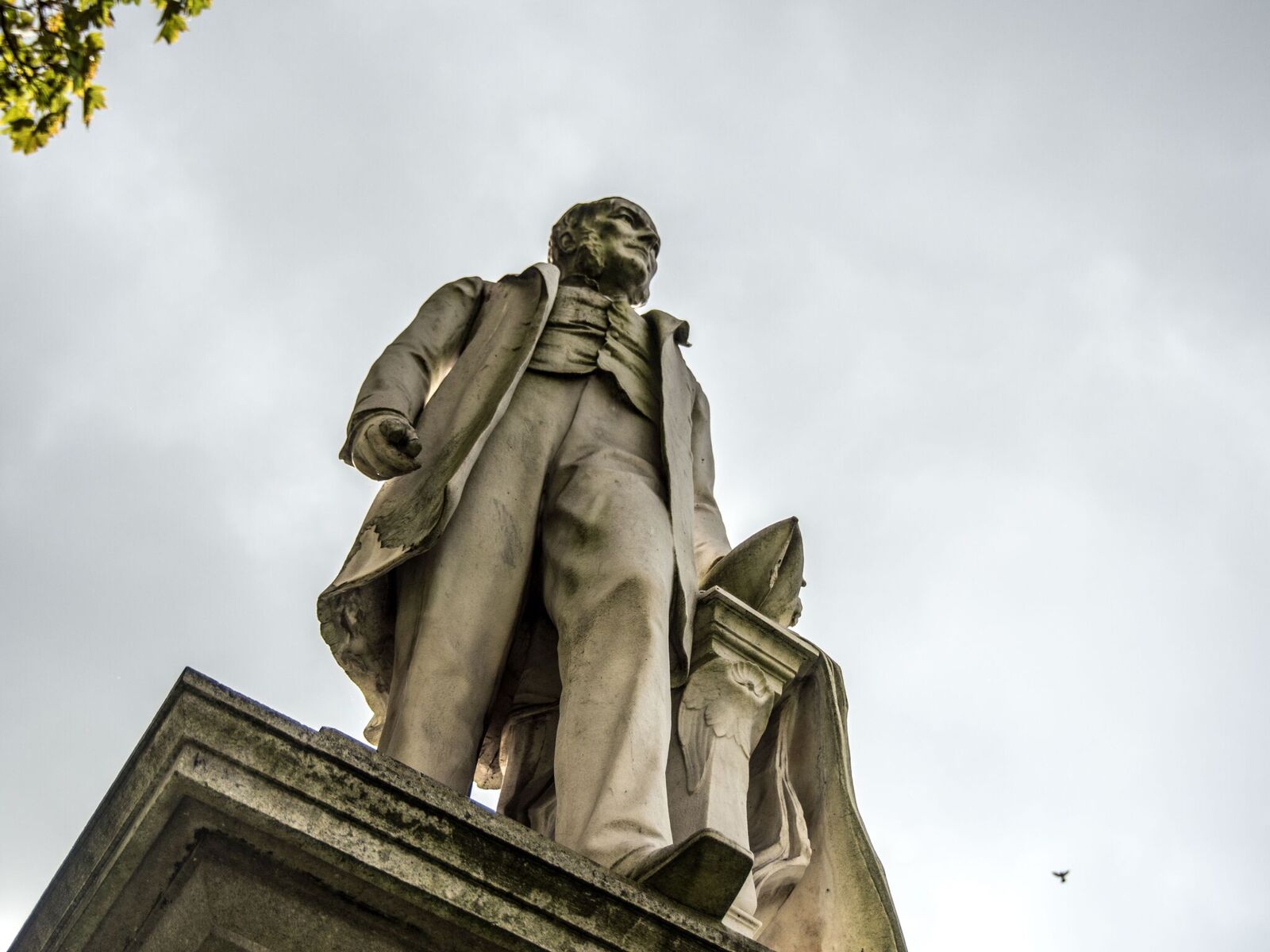
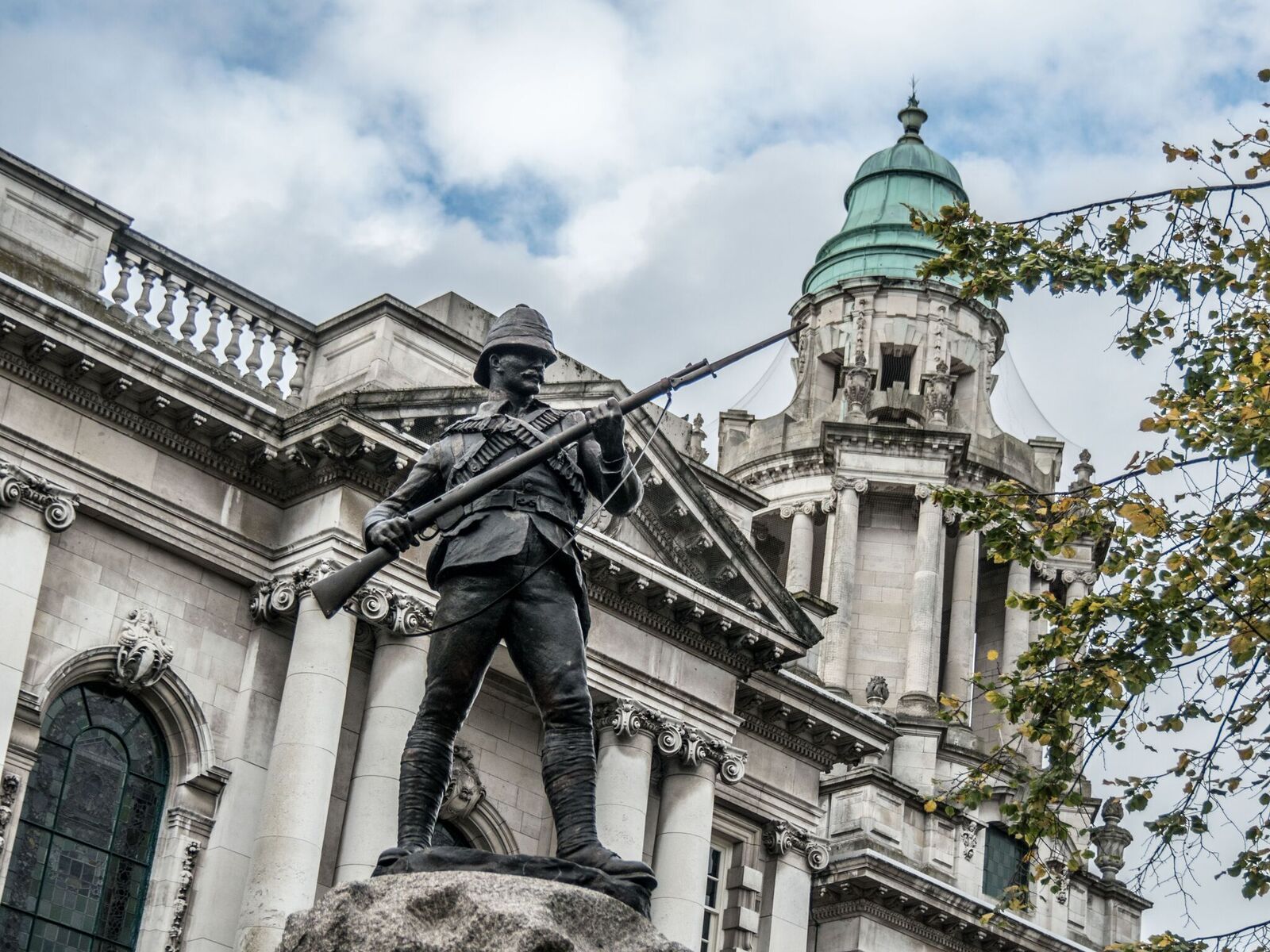
Statues and memorials. Several statues surround the building, including one of Queen Victoria by sculptor Sir Thomas Brock. Others commemorate Lord Dufferin, Edward Harland, co-founder of the Harland and Wolff shipyard, Sir Daniel Dixon, Belfast’s first mayor, and James Horner Haslett, another former mayor. Together they form a kind of open-air record of the people who shaped Victorian and Edwardian Belfast.
The Rose Garden. A picturesque rose garden surrounds part of the grounds, featuring several thousand roses across many varieties, and it offers a genuinely peaceful spot in the middle of the city centre. On a dry day, the lawns fill with office workers, students and tourists alike, all using the grounds exactly as they were designed to be used.
The Christmas Market. Every winter, Donegall Square transforms into Belfast’s Christmas Market, one of the city’s most popular seasonal events, drawing large crowds for its food stalls and festive atmosphere. If you are travelling with children and want to build a full day of family activities around a City Hall visit, Streamvale Open Farm makes a good pairing, a short drive outside the city centre, and for couples looking for something more low-key nearby, our guide to budget-friendly date ideas in Belfast includes several spots within walking distance of the square.
Beyond City Hall: Nearby Attractions Worth Your Time
City Hall works well as a base for exploring the rest of Belfast, since so much of the city centre sits within easy walking distance.
St Anne’s Cathedral and the Cathedral Quarter. A short walk brings you to St Anne’s Cathedral, also known as Belfast Cathedral, and into the Cathedral Quarter, Belfast’s arts and nightlife district, known for its cobbled streets, galleries and live music venues.
Queen’s Quarter and the Ulster Museum. Slightly further out, Queen’s University Belfast and the Ulster Museum sit together in the Botanic Gardens area, offering free admission to collections spanning art, natural history, and Northern Irish heritage, including the region’s connection to television and film production through pieces such as the Game of Thrones Tapestry housed at the museum.
Civic and political landmarks. History-minded visitors often continue on to Crumlin Road Gaol, a former Victorian prison now open for tours, or make the short trip out to Stormont, the seat of Northern Ireland’s devolved government, for a fuller picture of the political history City Hall itself has witnessed.
Current Conditions and Seasonal Information
City Hall is a year-round destination, and each season changes the experience slightly rather than closing anything off. Spring and fine autumn days suit the Rose Garden and grounds particularly well, since the gardens are at their fullest between late spring and late summer. Summer brings the busiest crowds in the square and the longest daylight hours for photography of the dome and exterior. Winter shifts the focus to the Christmas Market, which fills Donegall Square with stalls and lighting through late November and December, alongside shorter daylight hours that make an interior tour a sensible priority if the weather turns.
Belfast’s weather changes quickly regardless of season, so pack for rain whenever you visit. Guided tour availability can shift around public holidays and civic events held at the building, so check the current schedule with Belfast City Council close to your travel dates rather than relying on older listings, including this one.
A Local’s Perspective: Tips Beyond the Guidebook
Most guides stop at opening hours and statue names. A few details only come up once you have visited City Hall more than once, and they are worth knowing before you go.
Where to eat afterwards. The on-site coffee shop is convenient, but it is not the best food near Donegall Square. Step a few minutes in any direction, and you will find far better options; our guide to Belfast’s best restaurants covers several spots within easy walking distance for lunch after a morning tour.
The best picnic spot on the lawn. On a dry afternoon, the south-facing section of the grounds nearest the Titanic Memorial Garden gets sun for longer than the rest of the square and stays quieter than the main lawn near the entrance. It is a small detail, but it is the difference between a rushed sandwich standing up and an actual break in your day.
Look up before you go inside. Visitors queue for the interior tour and walk straight past the dome without a second glance. Cross to the far side of Donegall Square first and look back at the building. It is the only angle that shows the full scale of the dome and the Thane figure at its top, and most people miss it entirely.
None of this replaces a guided tour. It just makes the hour either side of it better.
Conclusion
Belfast City Hall rewards more time than most visitors give it. It is free, central, and tells more of Belfast’s story, industrial wealth, Titanic-era craftsmanship, conflict and peace, than almost any other single building in the city. Pair a guided tour with a slow walk through the grounds, and you will leave with a far fuller picture of Belfast than the dome alone suggests. For help building the rest of your trip around it, our complete guide to things to do in Belfast is the natural next stop.
FAQs
Is Belfast City Hall free to enter?
Yes, both the grounds and the guided interior tours are free to the public. The only costs you are likely to incur on a visit are optional purchases from the on-site coffee shop or gift shop. This makes City Hall one of the better-value stops on any Belfast itinerary, since it offers history, architecture and green space without an admission charge.
How do I book a tour of Belfast City Hall?
Guided tours generally run on a set daily schedule rather than requiring advance booking, though this can change around busy periods and civic events. Arrive at the main reception desk to check the next available slot, and confirm current times with Belfast City Council before you travel if your schedule is tight. Self-guided visits to the permanent exhibition are available throughout opening hours as an alternative.
What does “Béal Feirste” mean?
Béal Feirste is the Irish name from which Belfast is derived, and it translates roughly as the mouth of the sandbank ford. It refers to a crossing point on the River Lagan around which the original settlement grew, long before the city’s industrial expansion or its grant of city status in 1888.
How long should I spend at City Hall?
Most visitors need between 1.5 and 2 hours to properly cover a guided tour, the permanent exhibition, and a walk through the grounds. Add extra time if you are visiting during the Christmas Market or a temporary art exhibition, since both draw larger crowds and reward a slower pace.


