


Divulge the Hidden Treasures of Budapest – 15 Tourist Attractions to Consider Visiting
Updated On: November 08, 2023 by  Miranne Khaled
One of the greatest treasures that the world bestows upon us is the beauty called Hungary. This piece of land has been home to many great things, and, unfortunately, many hasn’t been aware of them.
Hungarian cities embrace many precious secrets to unravel, especially Budapest. There are many cities where you can spend a relaxing holiday, however, we’ve gathered some irresistible reasons to make Budapest your next destinations.
Budapest is popular for its endless historical sites and hyping festivals that can beat many of those around Europe. Tourists from every corner of the globe fly to Budapest to witness its tremendous beauty.
So, stick around and let us introduce you to some exciting destinations to visit in Budapest.
1. Chain Bridge
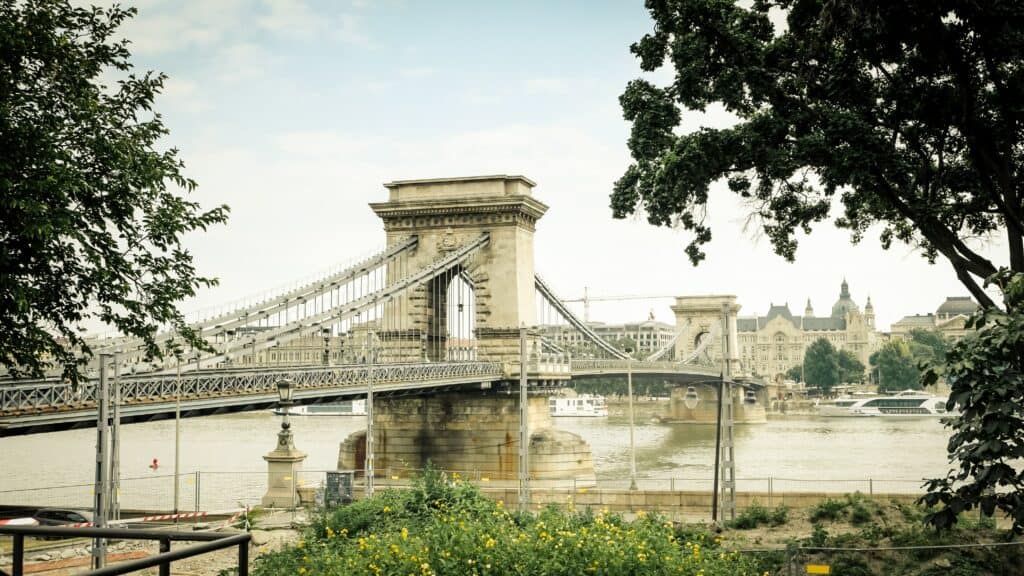
Whether you’ve been to Budapest or not, there are slim chances that you haven’t heard of its iconic Chain Bridge. Generally, this city is famous for its abundant bridges, yet the Chain Bridge stands out among all of them. This bridge was the very first one that the city ever witnessed.
Legends have it that Count István Széchenyi, the greatest Hungarian, is linked to this bridge. Ironically, he never even stepped a foot over this bridge, or crossed it at all. However, this connection may date back to the tragic incident when Széchenyi fell into the Danube.
What we see today is the renovated version of the bridge rather its former construction. During World War II, the Chain Bridge exploded and fell into the river. After its reconstruction, the famous stone lions of János Marschalkó were placed to guard the bridge. It has a very appealing view, so make sure you take a quick snap before you leave.
2. Statue of Liberty
Apparently, the United States is not the only country to be graced with the tremendous Statue of Liberty. Budapest happens to be home to another one; the Hungarian version of this statue. It is not as famous as that in New York. Also, it is slightly smaller than the American one.
The Statue of Liberty proudly sits on top of Gellért Hill. Despite not being that famous to the world, it is still a popular destination for Budapest visitors. According to the modern narrative, this statue pays homage to the Hungarian history and its nation.
You will find great pleasure while walking up to where the statue stands. Moreover, standing up there gives you a panoramic view that you will never forget. So make sure you have your camera ready in your hand to capture this breathtaking scenery.
3. The Buda Castle
Every UNESCO World Heritage Site is worth paying a visit, and the Buda Castle is no exception. This castle is one of the most prominent monuments in Budapest. Your trip won’t be complete without it. Interestingly, the castle rises high enough, making it seem like it’s keeping an eye over the whole city of Budapest.
The Buda Castle sits in the the Buda Castle District. This district has three main parts in which the castle is included. The historical residential area and St. George’s Square are the other two parts of this district. There is so much history in this place, even the air circulating around the precious castle is full of history. You will also enjoy the cobblestoned roads and wonderful sights.
This architectural masterpiece dates way back to the 13th century, being home to the kings of Hungary. It houses two museums, the Budapest Historical Museum and the Hungarian National Gallery. Also, it hosts the country’s biggest library ever, the National Széchenyi library.
4. Hungarian National Gallery
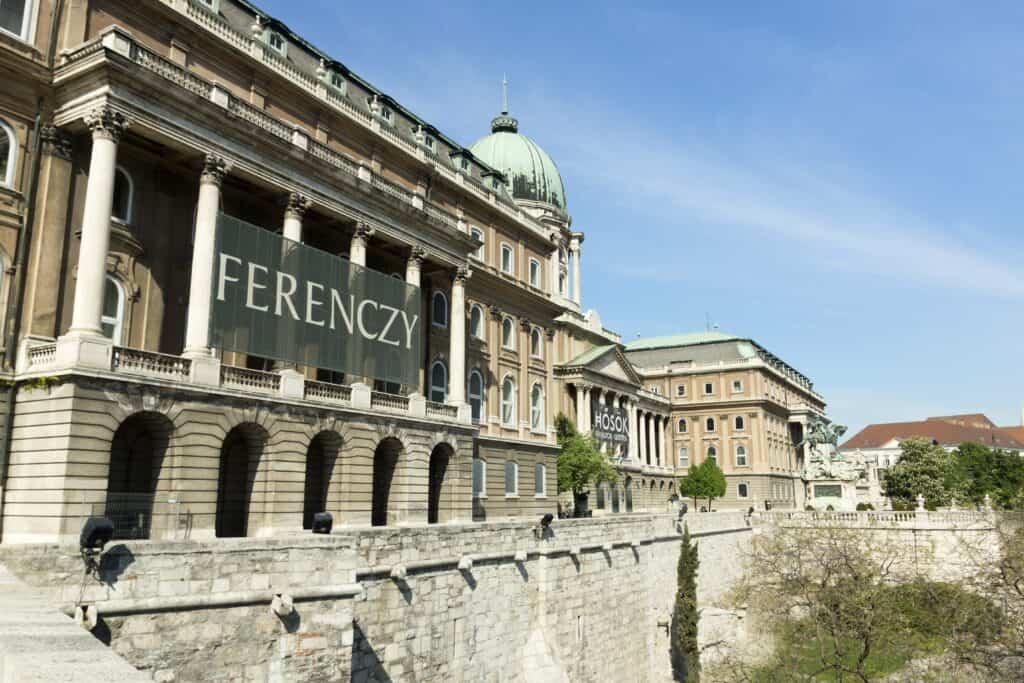
If you are planning to visit the Buda Castle, they you should definitely get into the Hungarian National Gallery. This terrific museum sits within the confines of the castle, exhibiting a tremendous collection of fine art. The art displays the history of Hungary through many centuries.
Besides the marvelous paintings and drawings, there thousands of statues, rare coins, and art prints. The collection of artworks are plenty that they leave no room for boredom; there is always something new to learn.
5. Budapest History Museum
Budapest History Museum is another fine building that the great Buda Castle hosts within its fortress. If you are a history buff, then this museum is an ideal destination to consider. This spot is one you shouldn’t miss.
Although the World War II destroyed many exhibits, there is still a wide array of collection you can enjoy. This museum showcases the upheavals that took place throughout the long centuries of the Hungarian history. It also displays how things were like to once was separate Buda, Pest, and Obuda.
6. The Museum of the House of Terror
What a spooky name for a place to be in! The stories that the Museum of the House of Terror embraces are not of a comedic nature. Well, you may have noticed that already, but it is not also about art or anything near that.
This museum is the icon of the Communist dictatorship and the Nazi. It witnessed a countless number of forced confessions, severe scourges, and gruesome murders. The Nazis used it for those ugly purposes.
Currently, this museum is a living proof of those terrible incidents. It houses the weapons they used in their torture sessions. Moreover, the museum is provided with interactive devices that will make you vicariously live through the victims’ minds. Who knew Budapest was full of all of that terror!
7. Shoes on the Danube Bank
The Danube River is one of Budapest’s highlights. It courses near many sightings that attract tourists from everywhere. One of the popular tourist attractions in Budapest is the monument ‘Shoes on the Danube Bank.’
Despite the tragic story of those shoes, it became a staple for many travelers. On the bank of the Danube, you will find around 60 pairs of shoes lining the bank. Many of them include shoes of little children. So, what is the story behind these shoes?
These shoes commemorate the victims of the Arrow Cross Party. They were innocent Jews who were selected for gruesome mass executions. Those innocent people stepped out of their shoes to be sent to their graves with a bullet in their heads. The foreign press had covered that tragic event, calling attention to the innocents that the Danube washed away a long ago.
8. The Island of Freedom (Sziget Festival)
For many years, Budapest become a popular spot for holding the hugest music festivals in the world. Party animals travel all the way to this city just to attend these hyping festivals. Sziget Festival is deemed the most popular in Budapest.
The Island of Freedom takes place in Óbuda-Island every year. This festival has been taking place since 1993. It started off with a small gathering of music fans who shared the same music interests. Later, largest number of visitors has been engaging in this event every year. The light that the Island of Freedom has gained made it the hugest festival across Europe.
9. The House of the Country (The Parliament)
This monument may be famous by the Parliament name in Budapest, but Hungarians rather call it the House of the Country. This beautiful monument was built in 1880. Regardless of the naming, this building is not just a typically boring structure that you barely notice.
In fact, this building has a colossal Gothic-like style that captures your attention and leaves you in awe. Observing the Danube river coursing right before this magnificent masterpiece adds a touch of perfection to it.
Choosing the bank of the Danube river to build this ruling house was not a random decision. As we all know, the Danube river runs through Budapest, splitting the city into two parts, Buda and Pest. The Buda part has its Royal Palace overlooking the river. Thus, the Parliament symbolizes the ruling power in Pest.
10. The Heroes’ Square
It would be a sin to visit Budapest and miss its iconic square, the Heroes’ Square. This square dates back to 1896, paying homage to the long history of Hungary. It features fascinating work of arts that will spellbind you upon seeing.
The square has an obelisk in the middle, featuring Archangel Gabriel. There are also statuses at the bottom, representing the 7 conquering leaders shielding 14 other statuses of great Hungarian kings. In 1900, this masterpiece has received the Grand Prize at the World Expo in Paris.
Moreover, the square houses the grave of the Unknown Soldier who is resting in peace right there. People from different places around the world pay a tribute to the Unknown Soldier. In fact, this phenomenon of paying respect to the Unknown Soldiers has been a worldwide one.
11. The Japanese Garden
Japanese gardens can be found around different areas in the world. They possess beautiful characteristics that capture the eye and the heart alike. Budapest is home to one of the world’s most beautiful Japanese gardens that you definitely shouldn’t miss. It serves as a spot for family outing, romantic getaway, or even a solo trip.
The Japanese Garden sits on the Margaret Island. It has the biggest music fountain all around Hungary. Not only that, but it also has amazing fishing lakes and a zoo. Atop of that, there’s a 33-meter high water tower that adds a layer of beauty to the already splendid garden.
This garden is a beautiful escape from the bustling city where you blend into magnificent forms of nature. However, there is also history to learn around this place. Dating back to the Middle Ages, Ferencz Order and the Dominican ruins remain in place. Thus, you may find it interesting to visit them while being around.
12. Gellért mountain
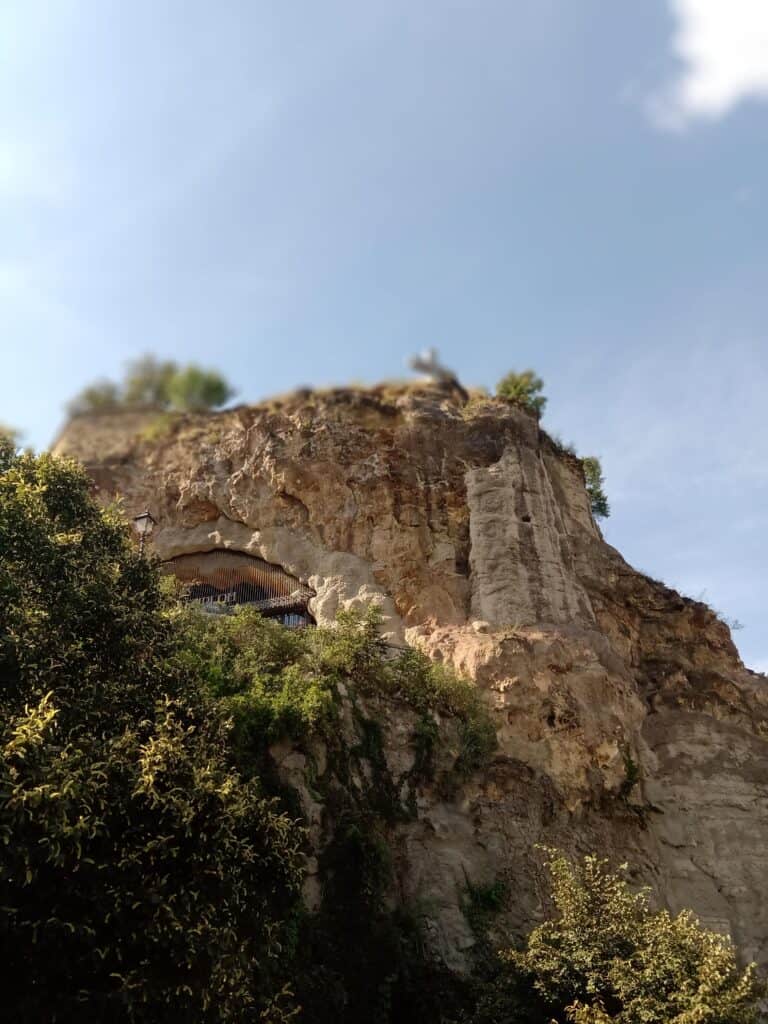
Budapest embraces lots of natural sightings and terrific monuments for you to enjoy, especially that it stands besides the Danube river. However, Gellért mountain sits on top of its most visited attractions. In 1987, the list of World Heritage Sites welcomed Gellért mountain aboard. It was also announced as a nature reserve.
St. Ivan cave is found on this mountain. It houses many springs with warm waters and its temperature remains the same throughout the whole year. Interestingly, the cave is always at 21 degrees Celsius, regardless of the temperature outside.
According to many studies, this mountain used to be home to ancient Romans and Celts. Nothing either supports or refutes this claim. However, this is not an average mountain where you just go for hiking and sightseeings. Don’t get us wrong! You can definitely do these things, but, on top of that, you have to hear the eerie stories around it.
One of the told tales is that the mountain’s name is linked to Bishop Gellért. Legends claim that the Hungarian Pagans placed him in a barrel and threw it in the Danube River from over the mountain. It was in 1046 when the war between paganism and Christianity was on ongoing. Some also profess that witches used to conduct their meetings up there.
13. Normafa
Normafa is a gift from nature presented to the Hungarian lands. It’s one of the top tourist attractions of Budapest that one can’t help but stand in amazement by its scene. Claims around its naming involve a European singer who sang an aria, called Norma, at the region. To be more precise, the enchanting incident happened by the famous beech-tree that used to be there.
That enormous tree used to stand a hundreds of meters high at the top of Normafa. Many legends profess that the tree started growing with the birth of King Matthias. We are not sure how the stories are related, but it’s a common tale among the locals. Recently, that tree is nowhere to be found, one would think it symbolizes the king’s death. However, that’s not the story told.
Many stories about how the tree was gone kept surfacing. Yet, the one that survived to our modern day involves a lighting incident. People claim that many lightings had struck the tree for several years until it no longer endured the force. And, boom! It is gone. You can still know where the legendary tree used to stand. The locals have marked its spot with a memorial plaque.
Besides the long gone tree, this place is a natural wonder that your eyes can feast on. The spacious greenery lands beautifies the region in many different ways. Moreover, the Normafa offers more of the gems of Budapest. These include the Lake Frog, Diznófő Spring, and Anna Meadow. There is also a chapel found there.
14. Thermal Baths
Budapest is well-known for its sensational spa culture. One of the many reasons that make it a perfect destination where you can slack off and take a time out. Across the whole city, you will encounter a dozen locations of thermal baths since it’s what their culture thrives on.
The phenomenon of thermal baths floating to the surface in Budapest dates way back to the old times. Roman settlers should take the credit for such unbending discovery. They found out about the dissolved minerals that these waters are laden with. One knowing that it greatly aided in treatment and relaxation, it became a staple in the Hungarian culture.
The most popular thermal bath is Széchenyi, found inside the City Park of Budapest. Consider heading to one of those mind-soothing thermal baths. Seize this opportunity to take your mind of the things that have been stressing you out. Nevertheless, if you have any health or physical conditions, you need to consult your physician before taking this step.
15. Tapolca Lake Cave
Since we have given you a long list of options to explore on the lands of Budapest, it’s time to go underground. Budapest is where you can have an enthralling underground escapade that you can remember for as long as you live. Taploca Lake Cave is a destination that it would be really sinful to miss.
The cave system is highly protected to safely welcome its visitors. It hosts three main caves, Tapolca lake Cave, Károly Berger Cave, and Hospital Cave. Inside those caves, you can come in contact with marly layers of limestone and slightly thick clay strips. Those elements are as old as over 13 million years.
The caves contain some dry parts and some wet ones. That dry part took place due to the drought times; there were time where the caves was empty of waters. However, you can sense the cooling touch in the air, so consider adding enough layers to your outfit.
On the other hand, the wet part is where the real adventure takes place. You can take a boat trip and tour through the cave for a brand new experience. Though it may feel a little intimidating, we assure you no disappearances accidents were reported.
16. Tram 2
While this is not a specific destination, it is an experience that your trip to Budapest won’t be complete without. It is a pile of many destinations that will amuse you and leave you in awe. Tram 2 allows you to witness numerous magnificent sights of Budapest. It starts off at Jászai Mari Square and ends at Közvágóhíd, with so many sightings in between to enjoy.
The best part is that a chunky part of the route flies along the bank of the Danube. Not only do you get to see the beautifully coursing river, but you’ll also see the monuments overlooking it. There’s also this option where you can get off the tram at any desired destination to enjoy it even further.
Budapest is here to present to you with some of the world’s real gems. If you’re so much into history, museum and art galleries are everywhere to be found. Relaxation is your ultimate goal? Well, nothing can give you that more than a city with a spa culture where thermal baths are abundant. Nature exploration and adventure seeking are also on the map!
Top Castles to Stay in Edinburgh for an Unforgettable Accommodation Experience
Scotland
23/04/2024

The Ultimate Guide to Finding the Best Places to Stay in London
England
23/04/2024

The Ultimate Guide to Finding the Best UK SIM Card for Travel
Travel Tips
23/04/2024

Planning Memorable Trips to the UK: Your Ultimate Guide
Travel Guides
23/04/2024

The Definitive Guide to Glamping in Scotland: Pods, Huts, and More!
Scotland
23/04/2024