


The Bob Marley Museum: Everything You Need to Know About the Iconic Attraction

Updated On: November 08, 2023 by  Salma Ihab
For all the huge fans of the “one love” singer, gather around because you will love this very much! And yes, I’m talking about the great Bob Marley, the reggae king. There is an entire museum dedicated to him and his accomplishments! Let’s explore the Bob Marley Museum together. But first, let’s talk about the reggae king.
Bob Marley
The incredible Bob Marley is a global symbol of Jamaican music and culture. In the 1960s, he blessed our ears with his music. Bob Marley was and still is the pioneer of reggae music.
His music style has left a distinct imprint; he was known for fusing elements of reggae, rocksteady, and ska. But, of course, we can’t forget about his vocals that give you chills. Not to mention his songwriting, which makes you realize how amazing the lyrics are every time you listen to his music.
What Exactly is Reggae Music?
Reggae music is one of those genres that makes you want to sway from one side to the other. Reggae music evolved from two similar Jamaican styles: “ska” and “rocksteady.” However, it is distinguished by its backbeat rhythm and clear and simple chord progressions.
The lyrics are typically sung in Jamaican and English dialects. But, of course, Bob Marley and The Wailers are two of the most well-known reggae artists.
The origin of the name “Raggae” is an interesting story; Reggae is derived from a Jamaican phrase that means “rags” or ragged clothing. The term reggae first appeared in the Tennors’ 1968 song “Reggae Girl.” That same year, Toots and the Maytals released “Do the Reggay.” The term stuck and became associated with the specific style of music created in Jamaica.
8 Questions You Might Have About the Bob Marley Museum
1. Where is the Bob Marley Museum Located?
The legendary reggae singer was born and raised in Jamaica, so his museum would naturally be in his hometown’s former residence and studio, which he lived in until his death in 1981. It is located in Jamaica’s capital, Kingston.
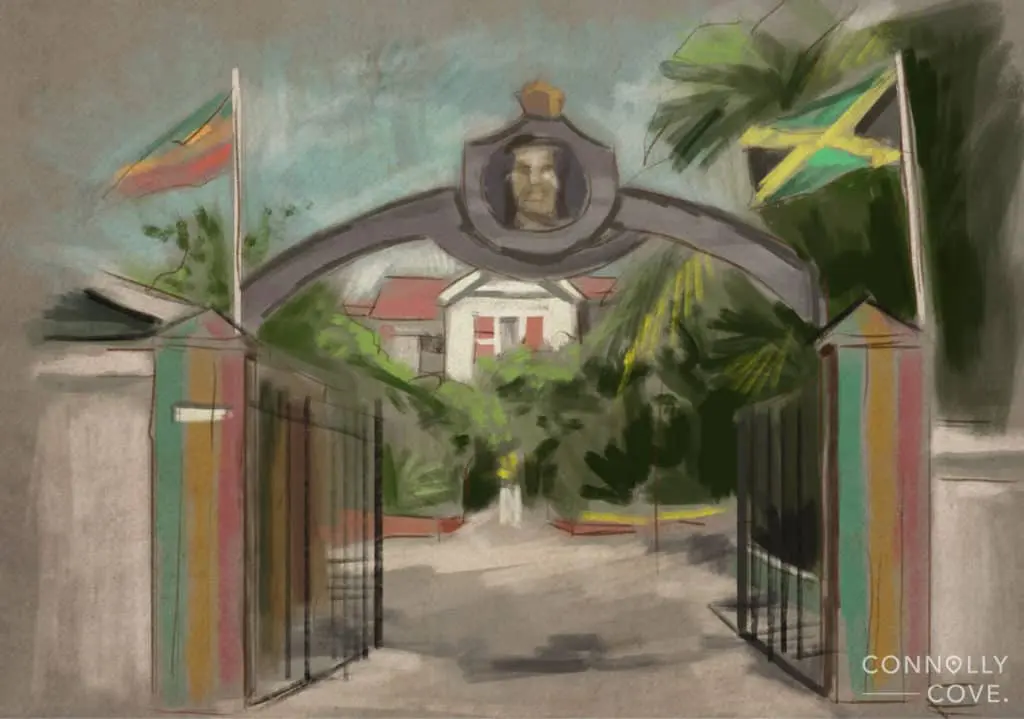
Today, Bob Marley’s house is Kingston’s most well-known and visited tourist attraction. If you’re lucky, you might run into one of his famed sons, who frequently visit to use the studio there.
2. What is the Bob Marley Museum Famous For?
When you walk into Bob Marley’s home, you immediately feel the richness of memories of this great Jamaican musician.
The house has an exhibition hall, a theatre, gift shops, and the One Love Café, and the lovely tour guides will take you through them all while sharing all the facts you need to know about Bob Marley.
The best part is that all the original rooms have been kept exactly as when Bob Marley lived in the house, allowing you to experience the authenticity of the place and feel his vibes.
3. What Can You See at the Bob Marley Museum?
One thing you’ll get to see and feel like you’ve met Bob Marley in person is a life-size 3-dimensional hologram of Bob from the 1978 “One Love Peace” concert.
Of course, we can’t forget his awards, like his “Grammy Lifetime Achievement Award” and a wide assortment of gold and platinum records worldwide.
You will have the opportunity to visit his recording studio and, last but not least, see the costumes of his backup singers.
4. What Kinds of Experiences Can You Have at the Bob Marley Museum?
As I said before, Once you set foot in the museum, you will feel like you have stepped into a time machine, transporting you back to the good old days of Bob Marley. Inside, you will get to watch live performances by the singer (who did not return from the dead, by the way)! I’m talking here about the theatre, which features projection equipment that will make you feel like you are in an actual concert.
Don’t forget to take a snack from the “One Love Café,” which serves Marley-inspired recipes and juices.
And, of course, no tour is complete without a gift shop. Stop by “The Bob Marley Gift shop” for a lovely souvenir to remember this incredible place.
5. How Long is the Museum Tour?
The tour provides a very personal look at Marley’s life and the history and philosophy of his music. The one-hour tour contains details of Bob Marley’s life after he relocated “uptown.” For guests with foldable wheelchairs and walkers, the museum is slightly handicap friendly.
The house is a two-story building with narrow stairs. There are three restrooms in the museum, so you won’t have to worry if you need to use them. We recommend dressing comfortably and wearing walking shoes so your feet don’t hurt in the middle of the tour.
The most important thing to remember is that Jamaica is a tropical destination, so bring insect repellent, sunscreen, and a large bottle of water to keep you hydrated throughout the tour.
6. How Much Does the Bob Marley Museum Tour Cost?
The tour costs $25 for adults aged 13 and up, $12 for children aged 4 to 12, and free for children aged 3 and under.
7. What Days Can You Go to the Museum?
Tours are given every half hour from 9:30 a.m. to 4:00 p.m., Monday through Saturday. Before you plan your next visit, please keep in mind that the museum is closed on Sundays and major public holidays.
You can book the tour through the Bob Marley Museum’s official website.
8. Is the Bob Marley Museum Worth Visiting?

The final question you may have is, “is it worth it?” My answer is yes. It’s a spectacular place to visit if you’re a huge fan, but if you’re not, you should reconsider.
All of the reviews are positive, and the majority of those who visited intend to return. So, if you’re looking for a sign, this is it! It’s time to plan a trip to Jamaica and see this place that will transport you back to Bob Marley’s fantastic era!
Finally, Before You Go, There is Something Important You Should Know
Most of us like to take pictures to remember special occasions, but you can’t take them inside the house; they are only allowed outside. We recommend taking picturesque shots in front of the stunning graffiti of Bob Marley and his family. Although it’s kind of disappointing not to be allowed to take photos of the iconic items inside the house, it is a chance to live in the moment and immerse yourself in every detail without being attached to your phone.

Discovering the Breathtaking Beauty of the North Coast of Northern Ireland!
Northern Ireland
19/04/2024

Unveiling the Reign of the Kings of Ulster: Thrones of Power
Mythology and Folklore
19/04/2024

Boudica: Iceni Queen and Roman Rebellion
History and Heritage
19/04/2024

Discover the Breathtaking Scenic Drives in Wales: Exploring the Beauty of the Country!
Wales
19/04/2024

10 Spectacular Scenic Drives in Ireland: Explore the Beauty of the Emerald Isle!
Ireland
19/04/2024