


The Amazing Blue Hole in Dahab
Updated On: November 08, 2023 by  Ahmed Samir
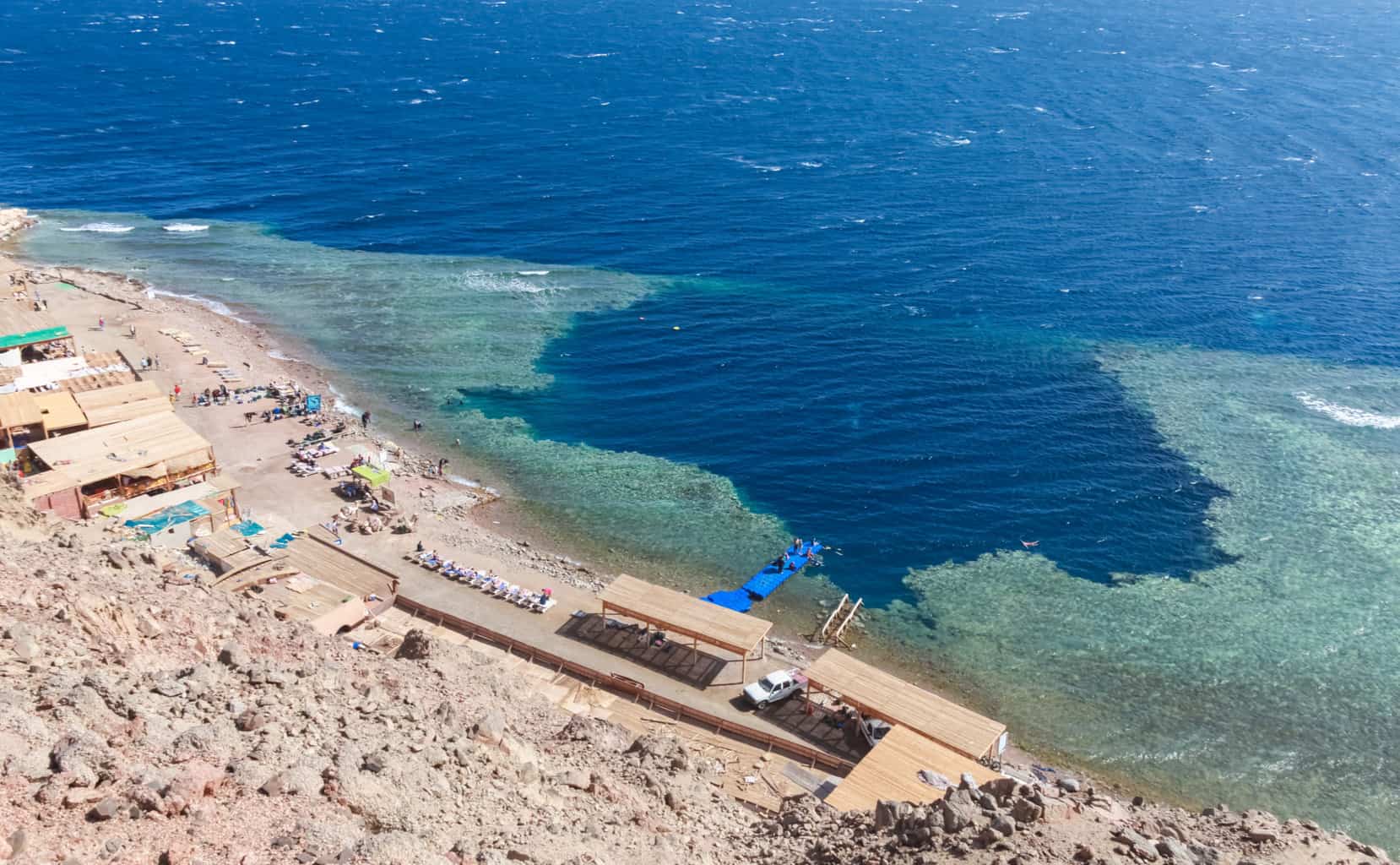
The Blue Hole is one of the well-known tourist attractions for diving enthusiasts worldwide, and there are very few places around the world, one of which is in Egypt in Dahab. Dahab is an Egyptian city belonging to the Governorate of South Sinai and overlooks the Gulf of Aqaba. It is about 100 km from Sharm El-Sheikh, 87 km from Nuweiba, and 361 km from Cairo.
Dahab has beautiful natural areas. It includes many incredible places to visit, represented in tourist attractions and markets, and several beautiful nature reserves. Therefore, this place balances the charm of nature along with endless fun.
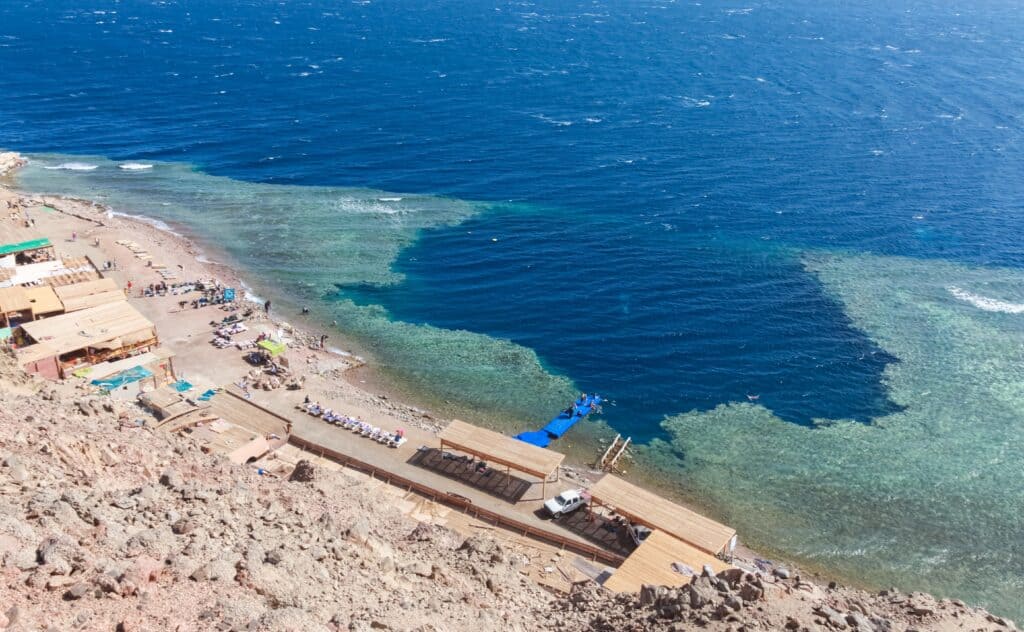
Among the beautiful tourist places in Dahab is the Blue Hole area. It is characterised by the beautiful Bedouin life and several other distinctive regions, including ports and touristic resorts overlooking the Gulf of Aqaba.
The Blue Hole is one of the most beautiful and best diving spots in the world. It includes a rare group of fish species, in addition to unique and mind-blowing coral reefs. It is considered a hot spot not only for diving professionals and adventurers, but anyone interested in diving activities, even honeymooners, despite the fact that the site can be dangerous.
The Blue Hole contains beautiful scenes picturing the harmonic interaction of light with plants and sea creatures, as well as the merging of the crystal blue sea water with mountains. The place might be dangerous because it includes several deadly caves, which seem less profound than they are. It has been named the best diving spot in the world by legendary explorer Jacque Cousteau.
The Blue Hole is 10 km North of Dahab in Egypt. It was famous for representing the two contradicting colours of life, white and black.
Some tourists see it as the “white”, beautiful and fabulous place, so the ultimate adventure is at the risk of diving to a depth of more than 100 metres to be amused with the beauty. Others see it as the “black”, dangerous and frightening area due to its variation in the colours’ shades from baby blue to dark blue, and because, with time, it has become a vast cemetery for many adventures and beauty lovers.
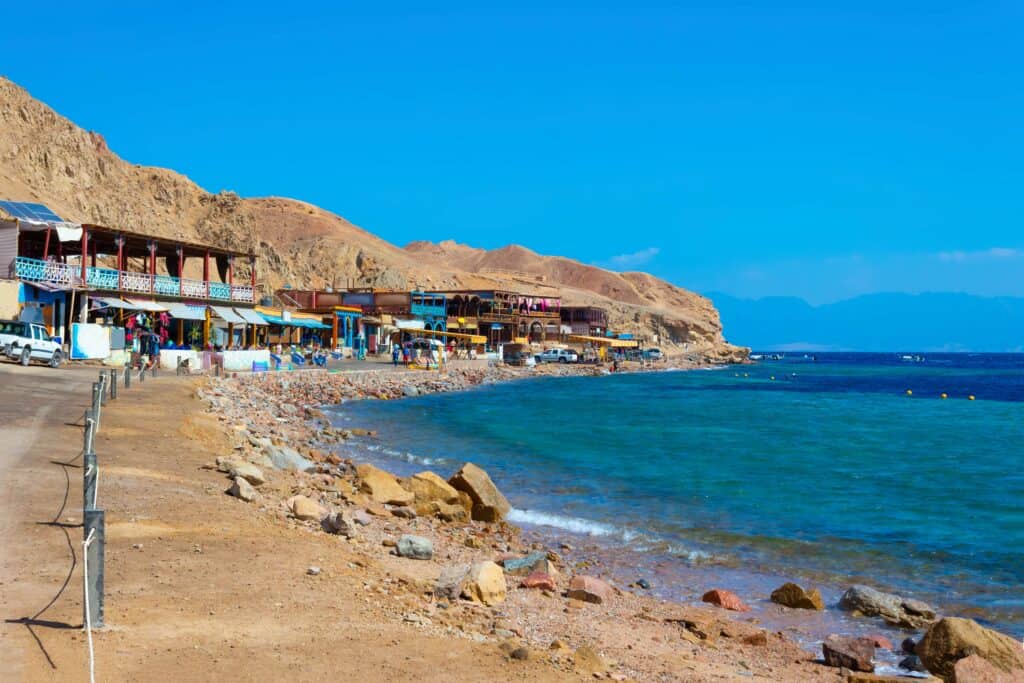
More Information about the Blue Hole
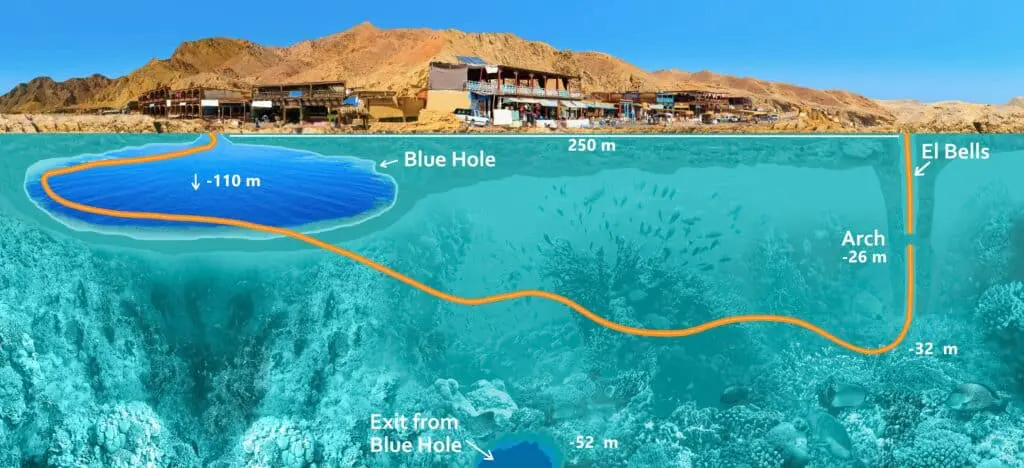
The Blue Hole is a diving hole on the Red Sea coast; it is a water street extending for a length of 90 metres, a depth of 100 metres, and a diameter of 50 metres. It is similar to a narrow road, or a slight hole found among the coral reefs, characterised by its charming colours and mind-blowing natural pictures.
It is worth mentioning that this hole is not far from Dahab Beach in the Red Sea, but a diver can take a swim in its water for a very short distance. The presence of a shallow opening- 6 metres wide, is known as the saddle. There is an opening to exit the blue hole called the arch. It is formed of a long tunnel of about 26 metres in length.
How was the Blue Hole Formed?
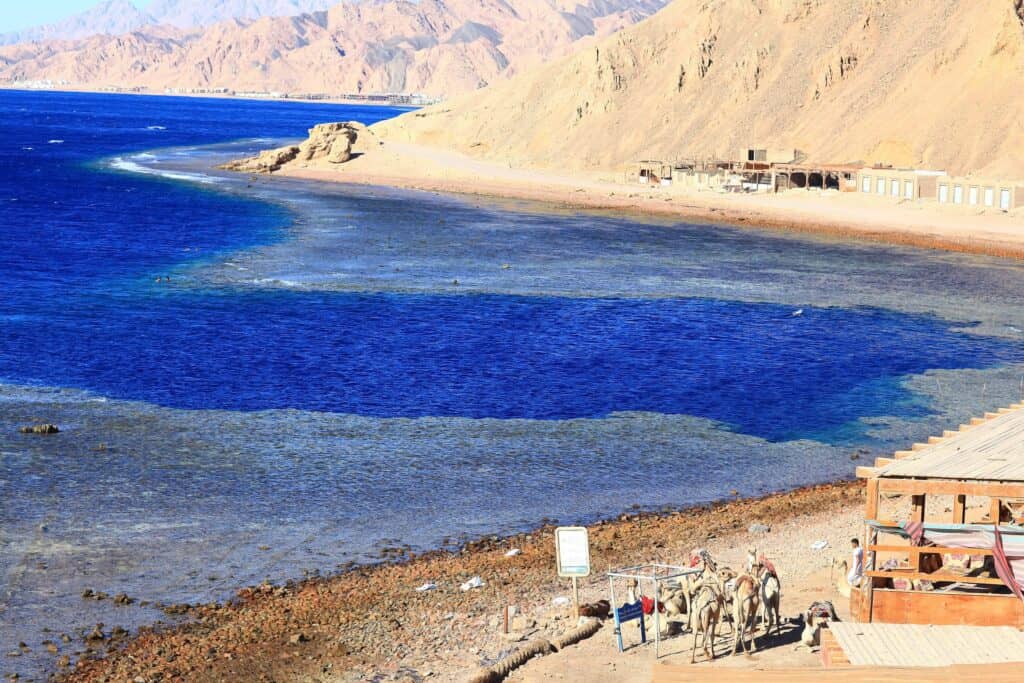
It is said that the reason behind the formation of the Blue Hole is the collision of a comet in this area, which caused the formation of a deep hole, a deep cave, and an underwater maze with great depth.
It was discovered in 1963 by a plane that found an extraordinary water spot, they were interested in exploring it for its striking beauty, but later on, they found the extent of its depth and how dangerous it could be. Even divers could not reach its maximum depth. Since then, it has been called the destination of divers because they come to the Blue Hole from everywhere to practise free diving and challenge themselves.
Another group believes that the reason behind its formation is the erosion of the limestone layers as a result of the flow of groundwater under the ice. Still, there are no confirmations of a specific reason for the formation of that deep spot of water filled with tunnels, caves, water currents, and many other factors with possible causes that led to the death of divers.
Why is the Blue Hole a Dangerous Place
The Blue Hole is one of the most famous diving sites in the world. Still, it is also renowned for its extreme danger, as more than 130 people have been lost in this hole during the last 15 years as they were trying to explore this blue hole, so it deserves to be called the cemetery of divers.
Two of the world’s most famous deep-diving pioneers, Dave Shaw and Chick Exley, drowned in it, which certainly indicates the extreme risk of exploring this hole.
Most cases of divers’ death that took place in the blue hole happened during the divers’ trial to open the arc or the tunnel that connects the hole to the Red Sea.
Many issues face the divers there, leading to their death, including lack of light and the entry of an opposing air current which causes a significant in reducing the divers’ speed until they run out of oxygen, leaving them unconscious during the last moments of their lives.
Blue Hole Diving Tips
- You must be careful and thoroughly plan the entire dive before starting.
- It would be best to accompany a diver as a guide in case you go to the most profound depth of the hole.
- The equipment you choose for diving must be in good condition and should be checked by a professional before the dive.
- You have to select diving goggles that suit your size to prevent water from leaking while diving.
- The diving suit must be perfect for your body structure so as not to cause you any issues while diving.
- Ensure the oxygen cylinder is filled with enough oxygen for the whole trip.
Water Reserves in Dahab
You can only come to the coastal city of Dahab to enjoy nature reserves and practise water activities. The charming city of Dahab offers you many opportunities and choices among various water reserves, such as:
Abu Galum Reserve
Abu Galum Reserve is located about 20 kilometres from Dahab. It is known to be one of the most beautiful places for swimming, diving, floating, and many other activities, such as camping, safari, and snorkelling. The area contains about 165 species of plants, and it is famous for the underwater cave system extending to depths of more than 100 metres.
The Three Balls
The Three Balls consists of three natural swimming pools in the middle of the water, formed by rocks and coral reefs, with depths ranging between 5 and 30 metres.
Well, we cannot deny that the Blue Hole could be extremely dangerous; however, you can always choose the less risky activities for you to have an enjoyable stay in this breathtaking area.

The Kingdom of Ireland: King Henry VIII’s Declaration as the King of Ireland
Ireland
19/04/2024
The Truth about the Claddagh Ring Curse: Debunking Myths and Exploring the Symbolism
Mythology and Folklore
19/04/2024

Top 10 Irish Public Holidays and Traditions to Experience on Your Ireland Holidays
Festivals and Events
18/04/2024

6 Top Mourne Camping Sites for an Unforgettable Experience Under the Stars
Northern Ireland
18/04/2024

Eostre: The Germanic Goddess of Dawn and Spring Equinox Celebrations
Mythology and Folklore
17/04/2024