


Best Places to Visit in Khedivial Cairo
Updated On: November 07, 2023 by  Dina Essawy
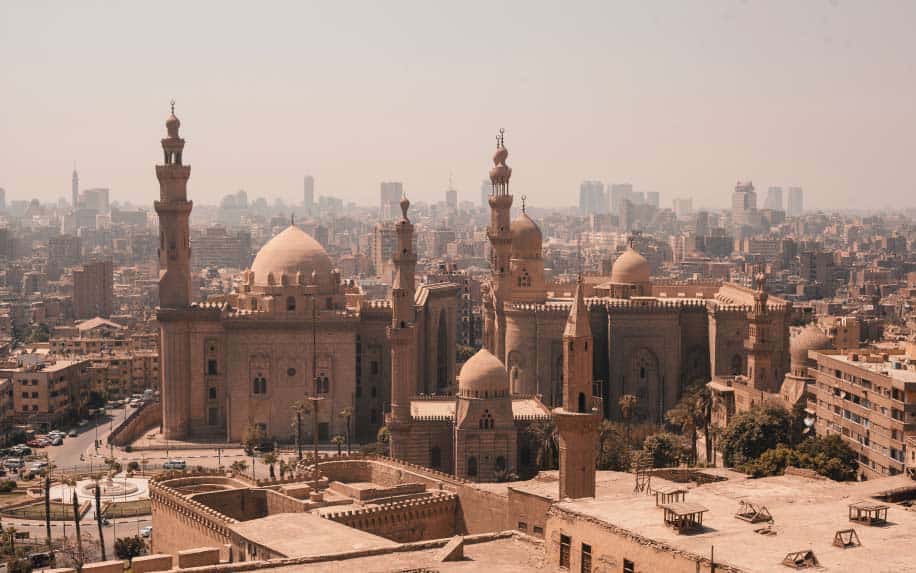
Egypt’s historical areas are spread all over the country, but Cairo has some of the most unique quarters of all. Recently, Egypt announced that it would begin a multi-million-pound project to renovate many of the landmarks that had long been forgotten or deteriorating, with special focus on Khedivial Cairo, an area of Cairo with many landmarks dating back to the era when Khedives ruled Egypt.
Once called the “Paris of the East” when it was built by Khedive Ismail in the 19th century with Parisian architecture, here are some things you should know about Khedivial Cairo:
Who was Khedive Ismail?
Ismail Pasha ruled Egypt in 1863. He is described by many as the “founder of modern Egypt”, specifically Cairo, as he introduced many modern conveniences to the city and it was during his reign that the first railroads were installed, as well as the trams that were established to help commuters move from Khedivial Cairo to other districts, such as Abbassiya and Masr el Gedida.
Ismail Pasha spent time in Paris for education and was so impressed by its architecture that he incorporated it around Cairo as well, which is evident in the designs of the streets and buildings in downtown Cairo and some of the designs of his many palaces.
In 1867, Khedive Ismail was invited by Napoleon III to attend the Paris World Exhibition and the Egyptian pavilion managed to draw the attention of its visitors. There, Khedive Ismail met Jean Pierre Barillet Deschamps, the landscape architect who designed Champs de Mars and Bois de Boulgne and who Ismail would later hire.
He was in a race against time as there were two years left until the grand opening of the Suez Canal where all the leaders and royals of the world were invited to tour Egypt. Ismail wanted to transform the city of Cairo into a European-style city to impress his guests, so he tasked Ali Mubarak Pasha, the head of the Public Works Ministry, with modernizing Cairo just as Georges-Eugène Haussmann was hired to develop Paris.
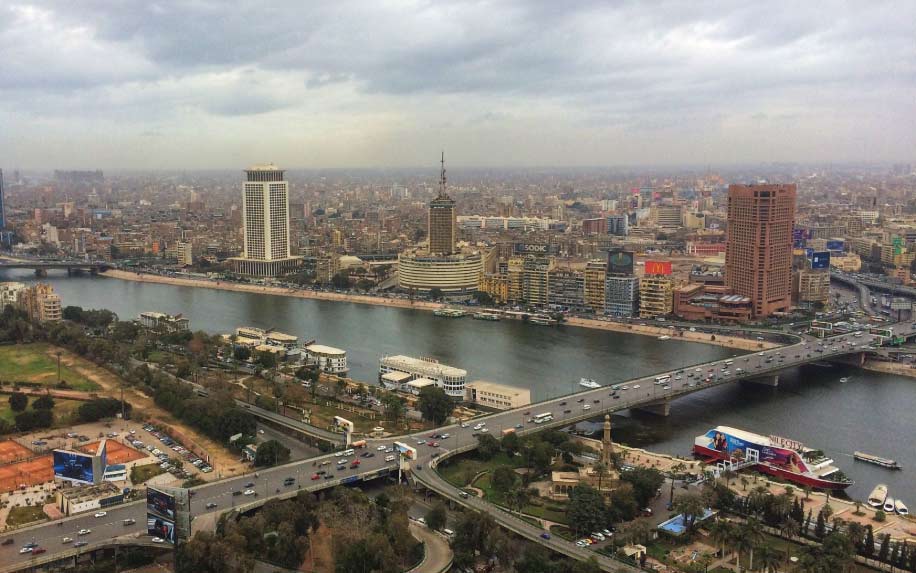
In 1872, Khedive Ismail opened Mohamed Ali Street, which stretched from El Qala’a Square to Attaba Square in Downtown Cairo. In the same year, he inaugurated the 400-meter Qasr El Nile Bridge to become the first bridge to connect the east and west banks of the Nile.
Ezbekiyya Gardens
Afterward, he turned to Azbekiyya gardens, which were made up of a pond surrounded by several houses. The pond was backfilled and replaced with a large garden.
Ismail hired Jean-Pierre Barillet Deschamp, the former chief gardener of the city of Paris, to landscape the city and design several gardens and parks in Egypt, including the twenty-acre Ezbekiyya gardens. The gardens were developed and decked with exotic trees imported from India, Australia, Cuba, Madagascar, and Brazil. The gardens were lit by 2,500 gas tulip-shaped glasses, an innovation at the time that Paris had just acquired as well. Ezbekiyya Gardens gradually became the central park in Cairo. Egyptians flocked to it to enjoy their days under the shade of stone houses and arcades.
Several European-style cafes were built, where musicians played foreign music to entertain the visitors. Until the 20th century, the gardens hosted many concerts for major Egyptian artists.
The New Cairo
French, Italian, German, and Egyptian architects all worked to develop the city of Cairo, which lead to an interesting and unique mix of architectural styles, such as neo-classical, baroque, rococo, renaissance, and Egyptian.
Swiss architect Charles Albert Behlar, left his mark on more than one city, such as Cairo, Paris, and Jerusalem. Behlar’s creative style can be found in a lot of places, especially hotels, inside and outside Cairo. In 1906, he designed hotels in Luxor and Aswan and bought shares in an old Hotel in Cairo.
In 1907, Behlar established a European-style district, now called Zamalek. In 1908, he bought an additional plot of land on Gezira Island to expand it, and he built many of the houses and buildings that are still standing today. He also built El-Gezira Palace for Khedive Ismail in the same district. He also designed many of the streets of downtown Cairo.
Another great example of this intermingling of styles can be seen in the 1925 Muhammad Shawarbi Pasha building that was designed by Lebanese-Egyptian architect Habib Ayrout who was educated in Paris.
One of the best constructions built at the time was the Cairo Opera House (or the Khedivial Opera House) that opened in 1869. It was designed by the Italian architect Pietro Avoscani inspired by the design of the Opera La Scala in Italy and was the first opera house in Africa. It hosted the first opera performance in Egypt during the celebrations of the inauguration of the Suez Canal, but unfortunately, this opera house burned down in 1971.
Since public entertainment was considered a priority in Khedive Ismail’s new city of Cairo, a circus was built behind the Opera House, next to the Ezbekiyya gardens in 1869, according to the designs by German architect Julius Franz and French architect Regis de Curel. However, it was torn down in 1872, and replaced by the neo-classical Mattatias apartment building that was designed by Ambroise Baudry in 1876, but remained unfinished and was demolished in 1999. A racecourse was also built in the center of Cairo, but in 1881, the land was sold.
Another historical building that was constructed in the neighborhood and has survived to this day was built in the Mamluk style in 1884 by French engineer and art collector Alphonse Delort de Gléon. In the 1890s, the building contained the Cercle Artistique, which held an annual art exhibition where international and local artists showed their works until it was purchased by the famous art and antiquities dealer Maurice Nahman in 1914 who turned it into his residence and showroom as museum curators came from all over the world to his shop to buy Egyptian, Islamic or Coptic antiques.
The Sabet Palace was replaced by the Savoy Hotel in 1898 and by the Baehler buildings in 1934. One of Nubar Pasha’s lavish homes was transformed into a hotel until 1914 when it was replaced by the Sednaoui department store designed by French architect Georges Parcq.
The Mamluk-style palace owned by the French Count Gaston de Saint-Maurice is now occupied by the French Embassy after being transferred to a new site in Giza. Today, the French Embassy boasts an impressive hall with four iwans, a fountain, in addition to carved door panels inlaid with ivory and marble.
In place of the Maurice Palace, the tallest building in Cairo at the time, The Immobilia, designed by French architect Max Edrei and Italian architect Gaston Rossi, was built.
One of the last remaining houses from that era is a villa on Shawarbi Street that once stood in the middle of a large garden, right next to Villa Maurice, and had an extension that was dubbed as the ‘Villa Medicis du Caire’ because it offered rooms and studio space to visiting painters. It was designed by Ambroise Baudry, who was commissioned by Baron Alphonse Delort de Gléon in 1872, in the Arab style. In 1908, it was bought by a wealthy landowner Mohamed Shawarbi Pasha, and then occupied by the Italian Embassy before becoming the headquarters of the political journal al-Siyasa in the 1930s and is now a trading firm.
The few other buildings include a school for girls called École des Jeunes Filles Nobles, designed in 1872 by Ali Pasha Mubarak and later used by several government ministries, and the massive neo-classical palace of Ismail Saddiq al-Muffatish, built around 1875 on Lazoghli Square and now used as a warehouse by the Ministry of Finance.
Nearby, you can find the palace and gardens of Khedive Ismail’s mother at Qasr al-Ayni, which turned into the neighborhood of Garden City in 1906.
Cairo continued to develop over the following decades. The private museum and palace of amateur collector Omar Sultan, the brother of feminist Hoda Shaarawi, on Gama’a Sharkass Street was built in 1907 in the Islamic revival style, with both buildings known as Dar al-Mathaf and housed the huge Ancient Egyptian art collection assembled by the young amateur. His sister also lived nearby, in a Mamluk-style house, adjoining another house-museum in the same style on Qasr al-Nil Street belonging to aristocrat Antoine de Zogheb.
In 1910, Khedive Abbas Helmi II built four residential buildings, dubbed the Khedivial Buildings, in Emad El-Din Street, designed by Italian architect Antonio Lasciac. Emad El-Din Street was one of the longest and oldest streets in Khedivial Cairo and was named after Sheikh Emad El-Din, one of the richest men in Egypt at the time, who used to own a palace in the same street.
These advances made Cairo a new world capital frequented by many foreigners from across the globe, many of whom chose to stay in the country and live side by side with the Egyptians as one diverse community, “It was a time when the corner grocer was Greek, the mechanic Italian, the confectioner Austrian, the pharmacist English, the hotelier Swiss, and the department store owner Jewish”.
Omar Elsharawy via Unsplash
Where to go in Downtown Cairo
Downtown Cairo is a well-known area to many Egyptians for its many famous landmarks.
Tahrir Square
The development of Downtown Cairo was said to have begun from Tahrir Square, which was named Khedive Ismail Square, who wanted it to lead to the Qasr al-Nil barracks and Abdeen Palace, but the square whose name was transformed during the reign of King Fouad to Ismailia Square, developed into one of the most important squares of the Egyptian capital, not only because it leads you to 18 ministries or the parliament building, but also because it connects to several main streets that represent a backbone of Cairo, including the streets of Qasr Al-Aini, Al-Galaa, Talaat Harb, Bab Al-Louk, and Ramses.
Tahrir Square has recently undergone major developments that saw the whole square renovated. An obelisk and several sphinxes were transported from Luxor to decorate the square that is considered the center of the city. The surrounding buildings were given a fresh coat of paint and decorated with lights. All of this was done ahead of the major event that took place in April 2021 where 22 mummies were transported from the Egyptian Museum to the National Museum of Egyptian Civilization in Fustat. The mummies were transferred in a majestic parade that went through the square before moving on to their new home.
Falaki Street
Many do not know who the astronomer is, who bears the name of the longest street branching from Bab al-Luq Square, but history says that he is Mahmoud Pasha Hamdi al-Falaki, one of Egypt’s brilliant minds in engineering and astronomy, one of Ali Pasha Mubarak’s students from the School of Engineering in Cairo, and the innovator of the annual calendars. Al-Falaki held several prominent positions in several ministries in his time.
Abdeen Square and its Royal Palace
As for Abdeen Square and its royal palace, Abdeen Bey was an emir of the Royal Brigade during the era of Muhammad Ali Pasha, and he used to live in a palace that was bought by Khedive Ismail after his death and transformed into the current palace. The palace stood witness to many historical events, such as the Orabi demonstration against Khedive Tawfiq in 1882, and when King Farouk was besieged by British tanks on 4 February 1942.
The palace was designed by the French architect Léon Rousseau and it cost 700 thousand Egyptian pounds to build, while the price of its furniture amounted to two million pounds, and the palace remained the seat of the Egyptian government until the revolution of July 1952. While the name of the square was changed from Abdeen to the El Gomhorya, its first name is stuck in the minds of Egyptians because of its connection to the palace, which was neglected after the revolution and turned into a centre for malaria vaccination, until it was decided to restore it in the 1970s. Now, the palace includes several museums displaying numerous artifacts and possessions that belonged to the last royal family in Egypt, such as rare jewelry, weapons, medals, and much more.
Qasr al-Nil
Qasr al-Nil was not just a palace or a bridge, but it became one of the most important streets of Khedivial Cairo, starting from Tahrir Square and extending across to Talaat Harb and Mostafa Kamel, passing through Sharif, Mohamed Farid, and Emad El-Din Streets, to end at Opera Square and El Gomhorya Street. The decision to build the street was dictated from Khedive Ismail to the chief engineer of Egypt at the time, Ali Mubarak, to be 1250 meters long and 20 meters wide, and contain a group of architecturally distinguished buildings, including the Nasser Social Bank building, which was in the past the headquarters of the Italian Bank.
Suleiman Pasha Street
Talaat Harb Square and Street is one of the most famous landmarks in the heart of Cairo, and despite the appreciation of all Egyptians to Talaat Harb Pasha, founder of Banque Misr, that became the mainstay of the Egyptian national economy in the 1920s, in the past, the square was named after Suleiman Pasha, the French man who entrusted Muhammad Ali with the task of forming the Egyptian army.
Suleiman Pasha was born in France in 1788, but he announced his conversion to Islam and Muhammad Ali chose his new name for him. He also married him to one of the women in his family, from whom he bore his three sons, including his granddaughter Nazli, the wife of King Fouad later.
Suleiman Pasha died in 1860 and was buried in Egypt, and an appreciation for his role in supporting the empire of Muhammad Ali, a statue of him was completed in 1872 to be placed in the same place where the statue of Talaat Harb is now, but it was moved from its place after the Revolution and put in the Military Museum.
Among the names of the streets of Khedivial Cairo, comes Merritt Pasha Street, a French-born archaeologist, whose full name is Merritt Auguste François, which starts from Ramses Street and intersects with the streets of Champollion, Qasr al-Nil, and Abdel Salam Aref.
Merritt Pasha’s relationship with Egypt began in 1849 when he was appointed to the Department of Egyptian Antiquities at the Louvre Museum in Paris, and then he was sent to Egypt a year later to buy Coptic manuscripts, but he fell in love with Egyptian antiquities and started excavating them in the Saqqara area, and he was responsible for the discovery of the Apis calf tomb, which contained the coffins of calves.
Hoda Shaarawi Street
Among the many women who became famous in Egypt, Mrs. Hoda Shaarawi’s name was given to one of the streets of Khedivial Cairo, which is the street branching from Talaat Harb Street and extending to Sharif and Abdel Salam Aref Streets. In the past, the street was known as “Sheikh Hamza”, the owner of the shrine which is located in it. However, after the July revolution, it was changed to Hoda Shaarawi, the pioneer of the women’s movement in Egypt, who underwent political struggles since her association with her husband, Ali Pasha Shaarawi, whose name she took after marrying him, and participated with a number of women, for the first time in the history of Egypt, in the demonstrations of the 1919 revolution. In 1923, she founded the Egyptian Women’s Union, which allowed women to engage in an activity that mixed politics and civil work, and in 1935, she was chosen as the president of the International Women’s Union. She died in 1947 at the age of 68.
In Khedive Cairo, streets bore the names of personalities from the royal family, which were changed after the July Revolution of 1952, to bear other names that express the new era, including King Fouad Street, King of Egypt in the period from 1917 to 1936, which changed to bear the name of 26th of July Street, in commemoration of the abdication of the last king of Egypt, King Farouk, on 26 July 1952.
Abdel-Khaleq Tharwat Street
There is also Abdel-Khaleq Tharwat Street, which starts from Ataba Square, and crosses a number of streets: Emad El-Din, Mohamed Farid, Sherif, Talaat Harb, and Champollion, and ends with Ramses Street, which from the beginning bore the name of the famous Egyptian politician, Abdel-Khaleq Tharwat Pasha, then it changed to bear the name of Queen Farida, the first wife of King Farouk, after her marriage to him at the end of 1930s, but it returned to its first name after the revolution. Ibrahim Pasha Square was named after the son of Muhammad Ali Pasha and the commander of his armies, which after the revolution turned into the Opera Square, which is now near the Attaba El Khadra Square.
In addition to the former royal streets, there is Tawfiq Street, which bore the name of Khedive Tawfiq, the son of Ismail Pasha. The street’s name changed to Orabi Street, and it connects Orabi Square with Ramses Street.
The streets of Khedivial Cairo bear not only the names of politicians, kings, and economists, but also the names of all those who contributed to the advancement of Egypt in all fields, between Naguib El-Rihani Street, the pioneer of comedy, and Dr. Antoine Clot Bey, the French doctor who was brought by Muhammad Ali Pasha to teach Egyptians medicine and is considered the pioneer of Egyptian medicine, and others.
Yacoubian’s Building
The writer Alaa Al-Aswany wrote his first novel, “The Yacoubian Building”, which sparked a lot of controversies before it was turned into a movie. The interesting thing is that the film’s creators found that the design of the real building that bears the name “Yacoubian” on Talaat Harb Street in central Cairo, does not bear the features described in the novel, so they chose another building near Al-Shorbagy Street. The real Yacoubian Building is located on Talaat Harb Street above Miami Cinema. It dates back to 1934, when it was founded by the leader of the Armenian community in Egypt at the time, the millionaire Jacob Yacoubian along with several other buildings, but this was the most famous. It included residents of different religions and races, expressing Egypt’s diversity, but after the July 1952 revolution, the ownership of a number of apartments and buildings in central Cairo was transferred to Egyptians, and over time, the rooftop rooms turned into housing for the poor, after they were housing for servants in the building or places for washing clothes or kitchens for preparing banquet food.
Groppi
Groppi is one of the most well-known shops in Cairo and perhaps all of Egypt. This ice cream shop in Cairo, located in Talaat Harb Square, was founded in 1909 by the Swiss Groppi family, helmed by the businessman Giacomo Groppi, and was owned by them until 1981. The shop was made famous as a meeting spot for lovers and was featured in numerous Egyptian films and TV shows which increased its popularity immensely. To this day, it is frequented by many Egyptians daily.
Café Riche
Another renowned downtown landmark is the Café Riche which opened in 1908 on Talaat Harb Street. The café became a meeting place for intellectuals and revolutionaries, including Egyptian Nobel Prize winner and nationalist novelist Naguib Mahfouz and the then-future president Gamal Abdel Nasser, and witnessed many historically significant events during the 20th century. It is said to be where the perpetrator of the 1919 failed assassination attempt on Egypt’s Prime Minister Youssef Wahba Pasha hid in waiting for the opportune moment; and where several members of the 1919 revolution met to organize their activities and print their flyers.
Ahmed Ezzat via Unsplash.
Renovating Khedivial Cairo in Modern Day
As part of the country’s plans to revive and develop many parts of Egypt, the Egyptian government has now begun a major project to renovate many of the buildings and streets belonging to Khedivial Cairo.
The initiative began with painting the facades of buildings and shops in the area in one unified color and unifying the fonts on the store signs.
The downtown area includes nearly 500 properties, 300 of which have been restored, in an effort to re-capture the atmosphere of the city from former times, preserve its heritage and history and promote tourism.
The idea began in 2009 when the Egyptian Ministry of Culture launched a joint cultural project with Spain to develop Khedivial Cairo or the Cairo of Khedive Ismail, who ruled Egypt from 1863 to 1879.
The project is implemented by taking advantage of Spain’s experience in preserving historical buildings, in order to preserve the buildings of a distinctive character in the center of the Egyptian capital, which form a triangle with the head at Tahrir Square and its bases are the Opera and Ramses Squares and the streets that branch from them, comprising 421 beautiful buildings within an area of no Less than 700 acres, dating back to the second half of the 19th century, and the first two decades of the 20th century, and it combines classic and Renaissance styles.
The aim of the project is also to transform the center of Old Cairo into a tourist and urban area, without prejudice to the historical structure of the districts.
On the other hand, the Egyptian Ministry of Culture has completed a plan to illuminate the western and eastern shores of Luxor according to the latest international systems so that the western shore will be prepared for visitors. This project began to be implemented in cooperation with the American Aid Agency to develop and restore the monuments of the eastern bank of Luxor at a cost of 60 million dollars, where the total cost of lighting on the eastern and western mainland reaches 100 million dollars.
All in all, it looks like Egypt has taken a keen interest in developing and preserving its architectural heritage to benefit its visitors as well as any future generations who should be able to enjoy the beautiful historical buildings and locations around the country, and specifically in its capital of Cairo.
Take a look at some of our other favourite destinations in Egypt.

Discover the Top 15 Best Places to Visit in Northern Ireland
Travel Guides
24/04/2024

How to Find the Best Scotland Travel Guide: An Ultimate Guide
Scotland
24/04/2024
The Ultimate Guide to the Best Shopping Areas in London
England
24/04/2024

The Absolute Guide to the Best Restaurants in Bath, England: Unveiling the Culinary Gems of Bath!
Food and Cuisine
24/04/2024

Planning a Trip to Scotland: Your All-Inclusive Guide to Exploring the Great Highlands
Travel Guides
23/04/2024