

Article Summary
What this article covers: The story of BelFeast, the Belfast food festival held in the Cathedral Quarter in March 2018, and a practical guide to the food festivals, markets and seasonal events that fill Belfast’s calendar today.
Who this is for: Travellers planning a food-focused trip to Belfast, visitors with Irish or Northern Irish roots, and locals looking for their next food weekend.
Key takeaway: Belfast doesn’t have one single annual food festival; its food calendar runs from weekly markets at St George’s to summer chef collaborations, dockside street food and winter markets, so the best food trip is planned around the season rather than one event.
Expert insight: “When we filmed BelFeast in 2018, stalls beside St Anne’s Cathedral had Armagh apple black butter sitting next to paella, and nobody thought that was strange. That mix is still the best way to understand how Belfast eats, and you can find it at St George’s Market any weekend of the year.”, Ciaran Connolly, Founder of ConnollyCove
Quick facts:
- BelFeast ran from 23 to 25 March 2018 in and around Belfast’s Cathedral Quarter, funded by Belfast City Council and delivered by the team behind Culture Night in partnership with Food NI.
- St George’s Market, built between 1890 and 1896, trades every Friday, Saturday and Sunday, and a Friday market has operated on the site since 1604.
- Belfast Mela marked its 20th anniversary in 2026, closing with Mela Day and its World Food Village at Botanic Gardens on 30 August.
Table of Contents
The Belfast food festival that first put the Cathedral Quarter on food lovers’ maps was BelFeast, a three-day celebration of Northern Irish produce, chefs and street food held in March 2018. The ConnollyCove team was there with cameras, tasting artisan and street food, joining food tours and listening to talks in the streets and in local restaurants and cafés. It was a strong first edition, and it said a lot about where Irish food in Belfast was heading.
A Belfast food festival today looks different. Instead of one big weekend, the city spreads its food events across the year, from chef-led dinners in late July to dockside street food in August and festive stalls at City Hall in December. This guide covers what BelFeast was, which festivals and markets carry that spirit now, the traditional Ulster flavours worth tracking down, and the practical details for planning a trip. If you’re new to the city, our guide to the city of Belfast sets out its quarters and history before you start eating your way through them.
What Was BelFeast, the Belfast Food Festival?
BelFeast was a three-day food festival held in and around Belfast’s Cathedral Quarter from 23 to 25 March 2018. Belfast City Council funded it, Destination CQ BID (the Cathedral Quarter’s business improvement district) sponsored it, and the team behind Culture Night Belfast delivered it with Food NI and the support of local producers and the hospitality trade. Its purpose was simple: show off Northern Ireland’s produce, the skills of local chefs, and the restaurants and cafés that make up the city’s food scene.
The name was a play on the city itself. Belfast comes from the Irish Béal Feirste, usually linked to the sandbank ford at the mouth of the River Farset, and swapping “fast” for “Feast” gave the organisers a name that stuck.
At the launch, Lord Mayor Nuala McAllister said the festival would build Belfast’s reputation as a food destination. She pointed out that Lonely Planet had already named Belfast among its places to visit for 2018 and that food culture was a big part of the reason.
What Happened at BelFeast in 2018
The programme mixed eating, learning and entertainment. An artisan food market and street food village set up beside St Anne’s Cathedral with more than 40 producers and street food vendors, selling everything from local cheeses and chutneys to cakes and hot food. Cookery demonstrations ran at the Metropolitan Arts Centre (The MAC), with sessions covering seasonal eating, cooking fish simply and the Belfast brunch.
Visiting food writers also joined a seafood chowder workshop at Belfast Cookery School and a guided food tour of the city. Tickets for individual events were sold by the venues themselves, so you could drop in for a single demonstration or build a full weekend around the programme.
Around the food, local musicians played a festival stage, street theatre performers worked the lanes, and community choirs and ensembles filled the gaps between. What we noticed most was how keen stallholders were to talk. Ask about a cheese or a loaf, and you’d hear which farm or bakery it came from, and often who ran it.
Why the Cathedral Quarter Suited a Food Festival
The Cathedral Quarter worked because everything sits close together. Named after St Anne’s Cathedral, it’s one of Belfast’s older districts. It’s built around narrow cobbled entries, former warehouses and small squares, and its restaurants, cafés and arts venues are all within a few minutes’ walk of each other. That made it easy to move between a demonstration, a market stall and a sit-down lunch without losing half the afternoon.
ConnollyCove’s guide to the Cathedral Quarter and Custom House Square covers the area’s history in depth. If you only have time for one lane, walk through Commercial Court, with its umbrellas strung overhead, which sits right in the middle of where BelFeast took place.
Did BelFeast Return?
We haven’t found any record of BelFeast running as a regular annual event after its 2018 edition. Belfast’s food calendar moved on instead, and several festivals now cover the ground BelFeast set out to cover: chef collaborations, artisan markets, street food and family-friendly food days. If BelFeast returns, we’ll update this guide.
Belfast Food Festivals at a Glance
The quickest way to plan a Belfast food trip is by season. The table below groups the city’s main food festivals and markets by typical timing, with 2026 dates as a guide where organisers have published them. Dates move from year to year, so check official listings before you book travel.
| Event | Typical timing | Where | Entry | Best for |
|---|---|---|---|---|
| St George’s Market | Every Friday, Saturday and Sunday | May Street / East Bridge Street | Free entry | Everyday local food and fresh fish |
| Biafest | Late July into August (2026: 24 July to 1 August) | Restaurants across the city | Ticketed per event | Chef collaborations and supper clubs |
| Titanic Quarter Food Festival | August (2026: 8 and 9 August) | Hamilton Dock, Titanic Quarter | Check the event listing | Waterfront street food and producers |
| Belfast Mela World Food Village | Late August (2026 Mela Day: 30 August) | Botanic Gardens | Check the ticket release | Global street food with families |
| Belfast Maritime Festival | Early September (2025: 6 and 7 September) | Maritime Mile, Titanic Quarter | Free | Regional producers at the Slipways |
| Belfast Coffee Festival | October (2026: 3 and 4 October, first edition) | Carlisle Memorial | Check the event listing | Speciality coffee |
| Belfast Christmas Market | Late November to just before Christmas | City Hall grounds | Free entry | Seasonal street food |
| BelFeast | 23 to 25 March 2018 (one edition on record) | Cathedral Quarter | Venue-by-venue tickets | Historical reference |
The Main Food Festivals in Belfast Today
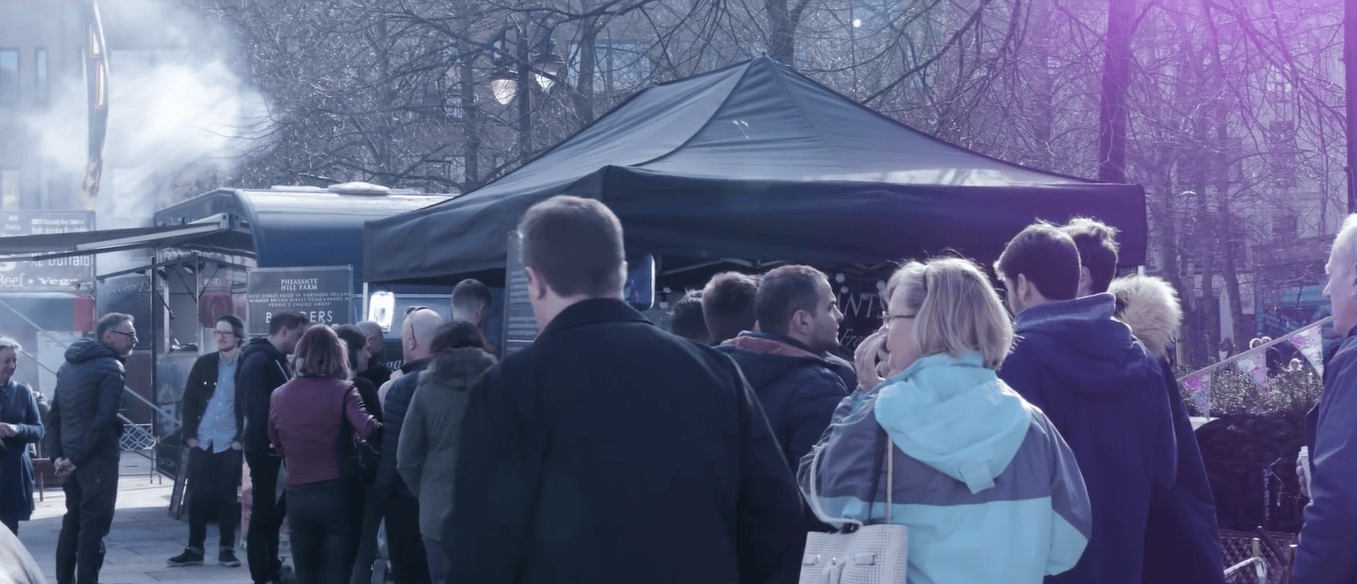
Belfast’s festival food season is busiest from late July to early September, when chef collaborations, dockside markets and Belfast Mela all land within a few weeks of each other. Plan a summer visit around that window, and you can fit two or three food events into a single long weekend.
Biafest: Chef Collaborations Across the City
Biafest is the closest thing Belfast has today to BelFeast’s restaurant strand. It’s a city-wide dining festival built on collaborations between chefs, producers and restaurants, and its name comes from “bia”, the Irish word for food.
In 2026, it ran from 24 July to 1 August, with around 40 events including chef takeovers, supper clubs and menus built around Irish produce. Events are ticketed individually, and the popular ones go quickly, so the festival’s mailing list is the best way to catch first releases. Biafest suits travellers who’d rather book a seat at a table than graze at stalls. If fine dining is the goal for the rest of your trip, our guide to Michelin star restaurants in Belfast covers the city’s top-end kitchens.
Titanic Quarter Food Festival and the Maritime Mile
The Titanic Quarter hosts the city’s largest outdoor food events, set against the SS Nomadic and Titanic Belfast at Hamilton Dock. In 2026, the Titanic Quarter Food Festival ran on 8 and 9 August from 11 am to 5 pm, timed to coincide with Fleadh Cheoil na hÉireann coming to Belfast. Street food, artisan producers, sweet treats, cookery demonstrations and traditional music sessions filled the dockside. A Titanic Quarter Night Market ran on the two evenings before, from 4 pm to 10 pm.
Early September usually brings the Belfast Maritime Festival along the Maritime Mile, free to attend and organised by Belfast City Council with Maritime Belfast Trust. Its Slipways Street Food Market brings regional producers to the spot where Titanic was built. The walk along the River Lagan from the city centre is part of the appeal, and ConnollyCove’s guide to Belfast tours explains how to link the shipyard sites with the rest of the city.
Belfast Mela’s World Food Village
Belfast Mela is Northern Ireland’s largest celebration of cultural diversity, and its food zones are one of the main reasons people go. Produced by the intercultural arts organisation ArtsEkta, the Mela began in 2006 and marked its 20th anniversary in 2026, running from 22 to 30 August.
The festival closed with Mela Day at Botanic Gardens from noon to 6 pm. There, the World Food Village sat alongside food and market zones such as Taste the World and Mela Bazaar, with five stages of music and dance around them. It’s the most family-friendly food event on the calendar, and a good way to see how Belfast’s newer communities have changed what the city eats. If the global menu is what draws you, ConnollyCove’s guide to Asian food in Belfast shows where to find similar dishes the rest of the year.
Autumn and Winter Food Events
Food events don’t stop when summer ends. In October 2026, the city hosts its first dedicated Belfast Coffee Festival at Carlisle Memorial on 3 and 4 October. From late November, the Belfast Christmas Market fills the City Hall grounds with food stalls and wooden chalets until just before Christmas. It’s the city’s busiest visitor window, so book accommodation early.
St George’s Market: Belfast’s Year-Round Food Festival
St George’s Market is the most reliable food experience in Belfast because it trades every Friday, Saturday and Sunday, all year round. Built between 1890 and 1896, it’s the last surviving Victorian covered market in Belfast, and a Friday market has traded on the site since 1604. It was named the UK’s Best Large Indoor Market 2023 at the NABMA Great British Market Awards.
Each day has its own character. Friday’s Variety Market has around 200 stalls, with a large fresh fish section alongside fruit, vegetables, books, clothes and antiques. Saturday’s City Food and Craft Market leans towards local and continental speciality food, from meat, fish and cheese to coffee beans and organic produce, with local musicians playing live. Sunday blends the two, with more space given to local arts and crafts.
According to Belfast City Council, the market opens from 8 am to 2 pm on Fridays, 9 am to 3 pm on Saturdays and 10 am to 3 pm on Sundays. There’s a quiet hour on Friday and Saturday mornings between 9 am and 10 am. The council’s official St George’s Market information page lists holiday changes and current trader offers.
A tip from ConnollyCove’s visits: walk the whole hall once before you buy anything. The best stalls aren’t always nearest the door, and Saturday mid-morning gets crowded. Our full guide to St George’s Market goes stall by stall. For a different setting, Common Market Belfast gathers independent street food traders in a single venue and works well for a casual dinner after a day of sightseeing.
Traditional Belfast Flavours to Try at Any Festival
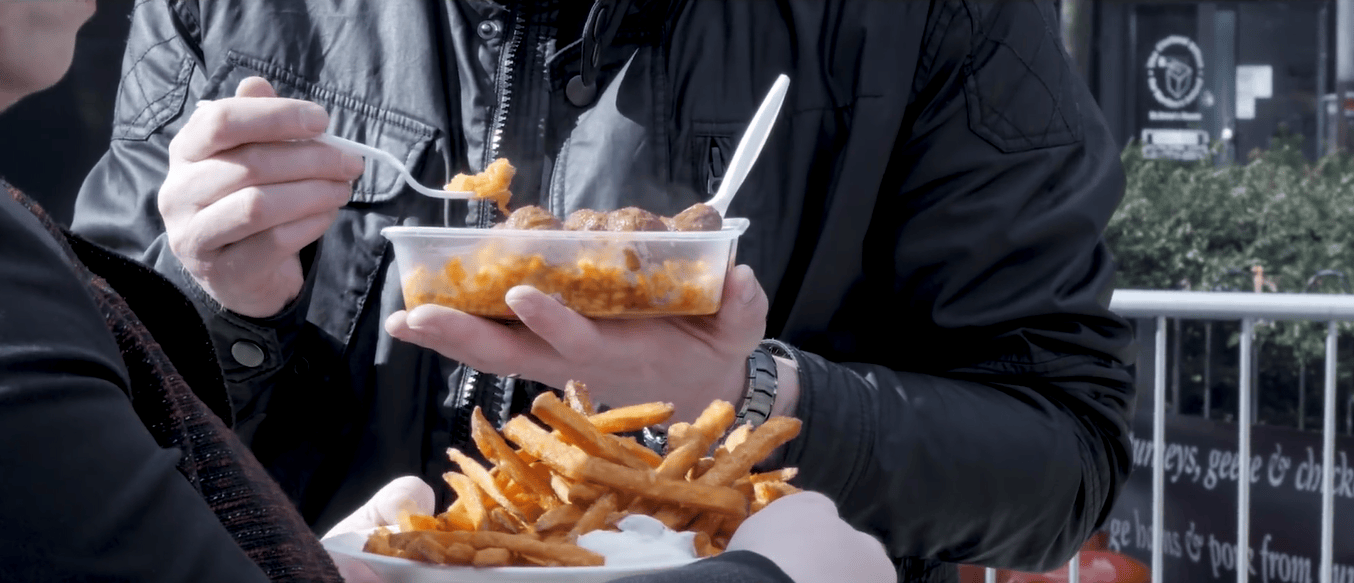
The dishes that tie Belfast’s food festivals together are the everyday ones: griddle breads, potato dishes and seafood from the coast. Almost every market sells some version of them, and knowing what they are makes a crowded festival stall much easier to read.
| Food | What it is | Where to look for it |
|---|---|---|
| Soda farl | Quarter-round griddle bread raised with bicarbonate of soda and buttermilk | Market bakery stalls; any café serving an Ulster fry |
| Potato bread | Thin griddled bread of mashed potato and flour, also called fadge or tattie bread | Bakeries; Ulster fry plates |
| Ulster fry | Cooked breakfast set apart by fried soda and potato breads | Cafés and market breakfast stalls |
| Wheaten bread | Brown soda bread made with wholemeal flour, often lightly sweet | Bakeries; served with seafood chowder |
| Dulse | Dried red seaweed eaten as a salty snack | Fish stalls; coastal fairs |
| Champ | Mashed potato with scallions, butter and milk | Restaurants serving traditional dishes |
| Yellowman | Chewy honeycomb toffee | Confectioners; Ballycastle’s Ould Lammas Fair |
The soda farl is the one to start with. “Farl” comes from an old Scots word meaning a fourth part, because the round of dough is cut into quarters before it goes on the griddle. Fried alongside potato bread, farls are what make an Ulster fry different from a full Irish breakfast. ConnollyCove’s guide to Northern Irish bread covers six breads worth trying, and our piece on the traditional Irish breakfast explains how regional versions developed.
Dulse (duileasc in Irish) is the flavour visitors are least likely to know. It’s a red seaweed gathered along the north Antrim coast and sold dried, and you’ll often find it at fish stalls. It’s traditionally paired with yellowman at Ballycastle’s Ould Lammas Fair in late August, one of the oldest fairs in Ireland.
Many of these foods also carry older meanings. Soda bread, potatoes and seasonal bakes appear throughout the Irish folk calendar, and our guide to seasonal foods in Irish folklore traces those links back to accounts gathered in Ireland’s 1930s Schools’ Collection.
How Belfast’s Food Scene Grew
Belfast’s food story follows its history as a port city surrounded by farmland and fishing coast. Market trading on the St George’s site goes back more than four centuries. Griddle breads made sense in households cooking over open fires, where a flat loaf baked quickly and cheaply.
The last two decades changed the picture. Chefs built reputations on local beef, lamb and seafood, a number of restaurants earned Michelin recognition, and events such as BelFeast gave producers a public stage. At the same time, the communities celebrated at Belfast Mela brought new food traditions that now sit comfortably beside the Ulster fry.
ConnollyCove, an Ireland-based travel and culture platform, has covered this change across many visits, from the 2018 festival weekend to the city’s markets and restaurants since. Our Belfast food guide collects restaurant recommendations in one place if you want to plan meals around the festivals.
Planning a Food Trip to Belfast
Base yourself in the city centre, get around on foot, by Glider or by train, and set your budget by how much of your trip is market grazing versus ticketed dinners. Belfast is compact enough that most food venues are within a 25-minute walk of City Hall.
Getting Around
The Cathedral Quarter, City Hall and St George’s Market are all walkable from each other, with St George’s roughly 15 minutes on foot from the Cathedral Quarter. For the Titanic Quarter, you can walk along the Lagan, take the Glider rapid transit bus or catch a train to Titanic Quarter station. Botanic Gardens sits south of the centre, a short walk up Botanic Avenue or one stop to Botanic station. Belfast Bikes docking stations also line the route to the Maritime Mile.
Budget and Tickets
Belfast food festivals range from free to fully ticketed. Market entry at St George’s is free, and Belfast City Council has promoted a Fab Food Friday lunch deal from participating traders at £5.95. The Belfast Maritime Festival is free to attend, while Biafest events and many chef collaborations are ticketed individually. Mela Day 2026 used an advance ticket release, so watch for announcements if you’re planning around the 2027 festival.
If you’re keeping costs down, ConnollyCove’s guide to 20 dates in Belfast for just £30 per couple includes several food-friendly ideas. Our list of things to do in Belfast for kids helps families fill the hours between festival visits.
Dietary Needs
Multi-vendor events such as the Mela and the dockside markets usually have vegetarian and vegan choices, but availability of gluten-free and halal food varies by trader and by year. Ask stallholders directly about ingredients, since cross-contact is common in busy street food kitchens.
Evenings After the Food
Many festival days end with music. Venues across the city host traditional sessions most nights, and our guide to live traditional music in Belfast points you to the regular ones.
Current Conditions and Seasonal Information

Belfast’s food festivals follow a clear seasonal pattern, even as exact dates change. Spring is the quietest period for big food events, though St George’s Market trades every weekend and the city is less crowded. Summer, from late July to early September, is peak festival season. Accommodation fills fast, especially in years when the city hosts a major event, as it did with Fleadh Cheoil na hÉireann in August 2026.
Autumn brings smaller specialist events and cooler, often wet weather. Winter centres on the Christmas Market, with short days and cold evenings. Most food festivals here are outdoors and run whatever the weather, so pack a waterproof layer in any month. For confirmed dates, Belfast City Council’s events listings and each festival’s official website publish the most current information.
Planning Your Visit?
The Belfast food festival calendar rewards a little planning: pick your season, book any ticketed dinners early, and leave room for a Saturday morning at St George’s Market. BelFeast may have been a single weekend in 2018, but the producers, chefs and markets it celebrated are all still here.
ConnollyCove produces practical travel guides and cultural stories from Ireland and destinations worldwide, and Belfast has been part of our coverage from the start. For more on eating out in the city, start with our Belfast food guide and St George’s Market guide linked above, or watch the ConnollyCove YouTube channel for our video from the BelFeast weekend and other Belfast food stories.
FAQs
Is BelFeast still running?
We haven’t found any record of BelFeast running since its first edition from 23 to 25 March 2018. Biafest, the Titanic Quarter Food Festival, and Belfast Mela’s World Food Village now cover much of what it offered.
What food festivals are held in Belfast?
The main food festivals in Belfast are Biafest, the Titanic Quarter Food Festival, the Belfast Mela World Food Village, the Belfast Maritime Festival’s street food market, and the Christmas Market at City Hall. St George’s Market also runs food-led markets every weekend.
When is the best time for a food trip to Belfast?
Late July to early September is the best time, because Biafest, the dockside food festivals, and Belfast Mela usually fall within that window.
Are Belfast food festivals free to enter?
Some are free, and some are ticketed. St George’s Market, the Christmas Market and the Maritime Festival are free to enter, while Biafest events are booked individually.