


6 Interesting Reasons Why Americans Don’t Travel Overseas

Updated On: November 10, 2023 by  Rahma Ali
If you had the opportunity to travel the world and visit new places, wouldn’t you take it? You might come across people of different nationalities, like British, Italian, Chinese, and Egyptian. You could learn about different cultures and explore some of the world’s most beautiful destinations.
Travelling the world sounds like fun, right? Wouldn’t everyone take this opportunity? Well, we’re not so sure that Americans would! In fact, some people believe that Americans do not want to travel at all.

If you live in a country outside of North America, the chances of running into an American are slim to none. Alternatively, if you’re from Mexico or Canada, your chances of meeting an American tourist are quite high; over half of Americans who travel internationally go to these two countries.
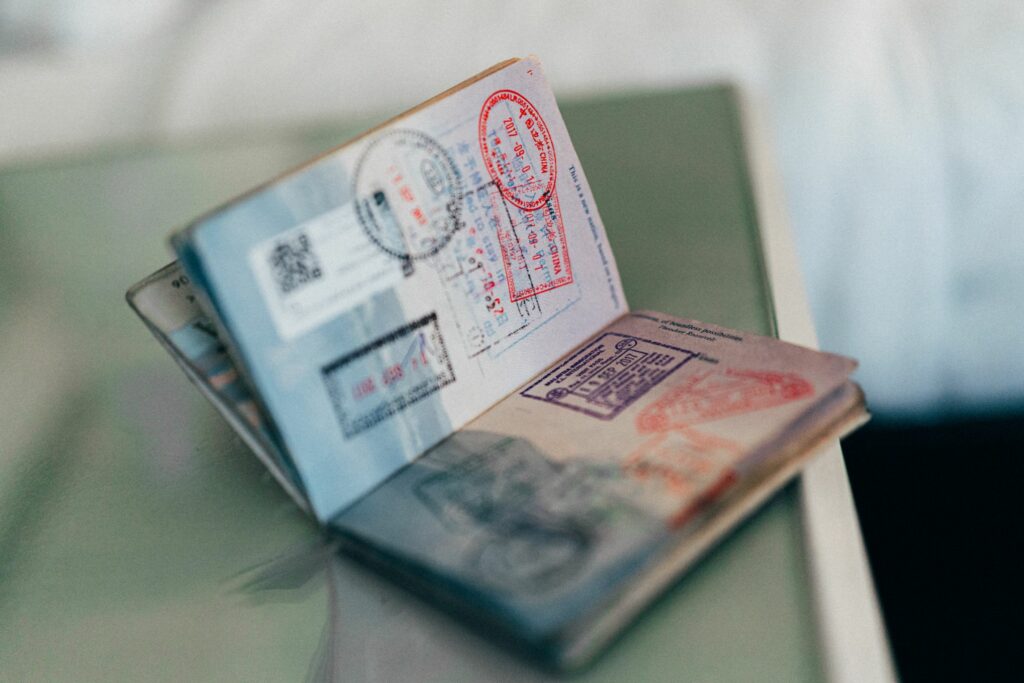
The statistics say it all; in 2017, CNN polled Americans and found that only 30% of the population had a passport! Although this percentage is growing each year, it is still proof that many Americans don’t travel outside the country.
In this article, we’re exploring 6 reasons why Americans don’t take international vacations. Scroll down to read through the blog, or click on one of the highlighted sections below to jump ahead!
Table of Contents

Is the Phrase ‘Americans Don’t Travel’ True?
Before we can understand why Americans choose not to travel overseas, we need to know whether this statement is true. Do the numbers show that Americans never travel, or is it just a misunderstanding? Forbes has the answer.
A study published by Forbes in 2019 can tell us more about the travel preferences of American citizens. The survey was answered by 2000 people, and the statistical results are very interesting:
- 11% of participants had never travelled outside their home state
- 13% admitted to having never been on a plane
- 54% of respondents said they had travelled to 10-15 US states
- More than 50% of the sample said they do not currently have a passport
- More than 40% of participants had never left the United States
- 32% said that they had never or couldn’t remember the last time they bought luggage
- 10% of respondents said they have zero interest in travelling internationally!
Note: we can easily overlook the two years after 2019 because the COVID-19 pandemic led to many ports closing worldwide, and travelling abroad was nearly halted.
From looking at this data, it is clear to see that the phrase ‘Americans don’t travel‘ has some merit! With this in mind, let’s look further into the reasons why a large amount of US citizens don’t travel internationally.
1. The USA has Many Diverse Destinations to Visit
The United States of America is a huge country with many different environments, habitats, and ecosystems. Because of this, many Americans do not feel the need to travel internationally when they have so many unique destinations within their borders.
Americans can fly to Hawaii or Florida if they’re looking for a tropical beach getaway. For a winter ski vacation, they can head to Colorado or Montana. America even has deserts to explore, like those in Arizona and Nevada.
Americans wanting a historic city break can visit New England and explore Massachusetts and Pennsylvania. If they want to go hiking, there’s no place better than the states of Oregon and Washington in the Pacific Northwest. And, of course, who can deny that there aren’t great destinations in the Midwest like Chicago, Illinois?
Across the vast United States, they can find pretty much any weather, environment, and activities. From the east coast of New York to the beaches of California on the Pacific Ocean, it is easy to see why some Americans feel like their country has it all.
Additionally, many Americans love to go on cross-country road trips, something unique to the United States. To them, the journey is just as fun as the destination! Americans will gladly spend 20 hours driving to a new city, making pit stops to visit attractions along the way.

The Array of Cultures in the USA
With so many diverse landscapes across the country, there is also a fantastic variety of cultures to experience in America. Mexican culture heavily influences the food, music, and traditions in southwestern states like New Mexico and Texas. Down south, Louisiana has rich French roots, as seen in their Mardi Gras parades and cuisine.
Travelling around the United States can provide tourists with a ‘teaser’ of many different international cultures. Because the country’s population began with European immigrants, many aspects of European culture have made their way into America. When you can get it all at home, why venture far away?
Since the end of the global COVID-19 pandemic, many Americans have had a change of heart regarding travelling abroad. They have realised just how valuable exploring the world is and want to venture beyond the US border. Passport applications are increasing, and seeing Americans across Europe and Asia has become more common.
2. Americans Don’t Feel Safe Abroad
Many Americans are afraid of travelling abroad, especially after the 9/11 terrorist attacks. The world beyond the United States border is vast, and it can be frightening for US citizens who have heard stories of others being targeted or attacked for holding an American passport. Although this may have happened, it is extremely uncommon and should not discourage anyone from travelling the world!
The perception of safety is subjective and influenced by factors such as media coverage, personal experiences, and cultural biases. In recent years, instances of terrorism, civil unrest, and health crises have further heightened these concerns among Americans, leading some to prioritize safety and familiarity over adventure.

News outlets in many countries tend to focus on sensational events, and America is no different. When incidents like terrorist attacks or natural disasters occur in foreign lands, they can dominate headlines and create an impression that travel is risky.
Such media coverage can foster a sense of unease and apprehension, leading Americans to perceive the world outside their borders as more dangerous than it may actually be. Additionally, cultural biases and misconceptions about other nations can influence Americans’ perceptions of safety abroad. Stereotypes can lead them to view certain countries or regions as inherently risky, even if it is untrue.
3. Everything Seems Far Away
The perception that international destinations are far away is one of the reasons why many Americans hesitate to travel abroad. Travelling across continents or oceans often requires lengthy flights, multiple time zones, and significant time spent in transit. Spending hours or even a full day on a plane can deter tourists with limited vacation time or who prefer shorter, more accessible trips.
Additionally, the United States is a vast country; for many residents, even domestic travel can involve long journeys. With this in mind, not all US states or cities are equally as far from the rest of the world, making it more inconvenient to travel internationally.
If an American from Minnesota wanted to take a vacation in Canada, it wouldn’t be a big deal. It is a 7-hour drive across 750 kilometres (465 miles), which isn’t a big deal to them! Alternatively, if someone from Texas wanted to make the same journey, the drive is over 22 hours long and nearly 2,500 kilometres (1,600 miles)! The person from Texas would be better off flying but must pay for airfare and a rental car.

Let’s take a look at how long it would take someone in Europe to travel to a new country. If you’re starting from Paris and want to visit Brussels, it takes about 4 hours and is only 300 kilometres away (186 miles). Yes, there are longer journeys you can take across Europe, but you’ll also likely get to visit multiple countries along the way. In the USA, you can drive for 13 hours and still not leave your state!
This means that for people living in Europe or Asia, international travel is significantly more accessible than for Americans. With the high costs of travel we discussed earlier, it is starting to make more sense why many US citizens travel domestically more often than internationally.
4. The High Cost of Travelling
Although some people believe that Americans don’t travel, this isn’t inherently true. Many Americans travel a lot, but only within their home country. Flying domestically or taking a cross-country road trip is significantly less expensive for Americans than flying overseas for a vacation.
The high cost of international travel is a significant deterrent for many Americans who dream of exploring the world beyond their borders. While the desire to experience new cultures and destinations is widespread, the financial realities of international travel can often pose a substantial barrier.
Weighing the options, it is clear why many Americans choose to travel domestically rather than internationally. Yes, a trip to London would be amazing! But, going to Boston is much more affordable for the average American.
One of the most substantial expenses associated with international travel is airfare. Flights to foreign countries can be expensive, especially during peak travel seasons. Plane tickets from the United States to Europe or Asia can cost thousands of dollars. In comparison, round-trip domestic flights can be purchased for less than $100 during sale events.

Additional expenses, such as accommodation, food, travel insurance, renting a car, etc, also are a significant factor. These prices are often much lower in the United States than in Europe. The quality and location of accommodations often correlate with their price, leading some people to choose higher quality options in the USA rather than staying at an average hotel abroad.
It is not entirely fair to compare how many countries European travellers visit with the data from American tourists. Europe is connected by a fantastic transit system; transcontinental train tickets can be less expensive than a one-way trip abroad for an American! Instead, it is more equitable to compare countries visited by Europeans with states visited by Americans.
5. The Strong Values of American Work Culture
American work culture, often characterized by long hours, limited vacation time, and a strong emphasis on career dedication, can deter many Americans from travelling internationally. Unlike some European countries, where extended vacations and work-life balance are prioritized, the American workforce frequently faces pressures to prioritize work over leisure.
The impact of the American work culture is evident in statistical analysis. In 2019, Glassdoor published shocking findings after they surveyed Americans regarding how they use their paid time off. Here are some of the data collected:
- 9% of respondents took no paid time off in the last year
- 23% used all of their paid time off
- In total, there were 768 million unused days of paid leave across the United States in 2018
- 60% stated they would reject a job offer if it did not include paid time off
- 77% of employers prefer giving raises over additional paid leave

While these results may seem very surprising, it is not uncommon for American workers to go without paid leave for long periods of time. In fact, the United States is the only advanced economy in the world that does not guarantee paid vacation days or public holiday leave to its workforce.
In Countries across Europe, many employees get four to six weeks of paid leave. This is not the case in the USA, where employees are often not given any paid leave until their second year at a company and then only get a maximum of two weeks off.
Paid leave is often saved up in case of emergencies instead of being spent on holidays. There have even been instances where groups of employees pool their paid days off and gift them to a colleague dealing with a medical crisis or other issue that requires them to be away from work.
It is easy to see why this type of work culture would cause Americans to spend less time on holidays, both internationally and domestically. It’s not that they do not want to travel; it’s that they can’t! And, even if an American decided to take a gap year between school and work, it would be frowned upon in their society.
Some American employers will scrutinise applicants with a gap in their resume. Instead of seeing it as a year to travel, learn new things, and discover yourself, many Americans view it as lazy or not being committed to your future. This is the exact opposite of the European sentiment, where gap years are seen as a beneficial experience.

6. There are Language Barriers
Unlike Europeans, who often have the advantage of being exposed to multiple languages from a young age, many Americans grow up primarily speaking English and may not have the language skills necessary to navigate comfortably in foreign countries.
Language plays a crucial role in facilitating communication and understanding when travelling abroad. Americans may worry that they won’t be able to effectively communicate their needs or navigate unfamiliar environments if they don’t speak the local language. This fear can deter them from venturing beyond the US border.
Another factor contributing to the monolingualism of Americans is a lack of emphasis on language education in the United States. While foreign language classes are available in American schools, they often start later than in many other countries and are not always a mandatory part of the curriculum.
According to the US Census Bureau, only 20% of Americans speak a second language fluently. Parents who teach their children other languages typically only teach them Spanish due to the large Spanish-speaking population in the country. This opens the door for travel to parts of Central and South America, but not much farther.

The Truth Behind the Phrase ‘Americans Don’t Travel’
The reasons why many Americans choose not to travel internationally are multifaceted and often intertwined with cultural, financial, and logistical factors. The desire to explore the world beyond one’s borders is undoubtedly present, but several obstacles can hinder their ability to explore the world.
These barriers include the high cost of travel, concerns about safety, language barriers, perceptions of distant international destinations, and the demanding nature of American work culture. All of these hurdles prevent US citizens from venturing out into the unknown and experiencing some of the best destinations in the world.
By addressing these obstacles and emphasizing the importance of broadening horizons, we hope to see a future where more Americans embrace the world as their playground and experience the transformative power of global travel.
If you enjoyed this article, consider reading one of our other blogs:
Travel Guide: 7 Important Tips You Must Know | 13 Luxury Travel Destinations to Spoil Yourself | Your Guide to Solo Travel Best Destinations | 40 Handy Travel Tips to Be the World’s Canniest Traveller | How to Travel Light: 15 Genius Travel Packing Hacks | 10 Best Travel Books to Get Inspired | Travel Essentials: Your Ultimate List of Things You Must Never Go on a Trip Without | How to Choose a Backpack While Travelling: Expert Advice | Discover Top 10 Unique Travel Destinations in the World: Get Ready for Unforgettable Vacation | Best 10 Apps for Travelling That You Will Need to Install

The Kingdom of Ireland: King Henry VIII’s Declaration as the King of Ireland
Ireland
19/04/2024

The Truth about the Claddagh Ring Curse: Debunking Myths and Exploring the Symbolism
Mythology and Folklore
19/04/2024

Top 10 Irish Public Holidays and Traditions to Experience on Your Ireland Holidays
Festivals and Events
18/04/2024

6 Top Mourne Camping Sites for an Unforgettable Experience Under the Stars
Northern Ireland
18/04/2024

Eostre: The Germanic Goddess of Dawn and Spring Equinox Celebrations
Mythology and Folklore
17/04/2024